- What social listening is, in plain language
- How you use social listening for your own brand
- How you track competitors and position as an alternative
- How you track industry keywords and join buying conversations
- Why repeating this leads to more leads and signups
- How LLM citations can create indirect signup growth
- SEO benefits of social brand mentions
- A practical setup you can run as one person
- Conclusion
If you run marketing, support, or founder-led growth, social listening can give you a strong edge.
People share real problems in public every day. They ask for tool recommendations. They compare options. They post praise. They post complaints. They explain what they tried and what failed.
When you listen to those conversations on purpose, you get:
- faster feedback
- clearer positioning
- more chances to show up where buying intent already exists
A practical definition from Reddit’s own business resources describes social listening as tracking and analyzing online conversations to understand audience sentiment and needs (Reddit for Business).
What social listening is, in plain language
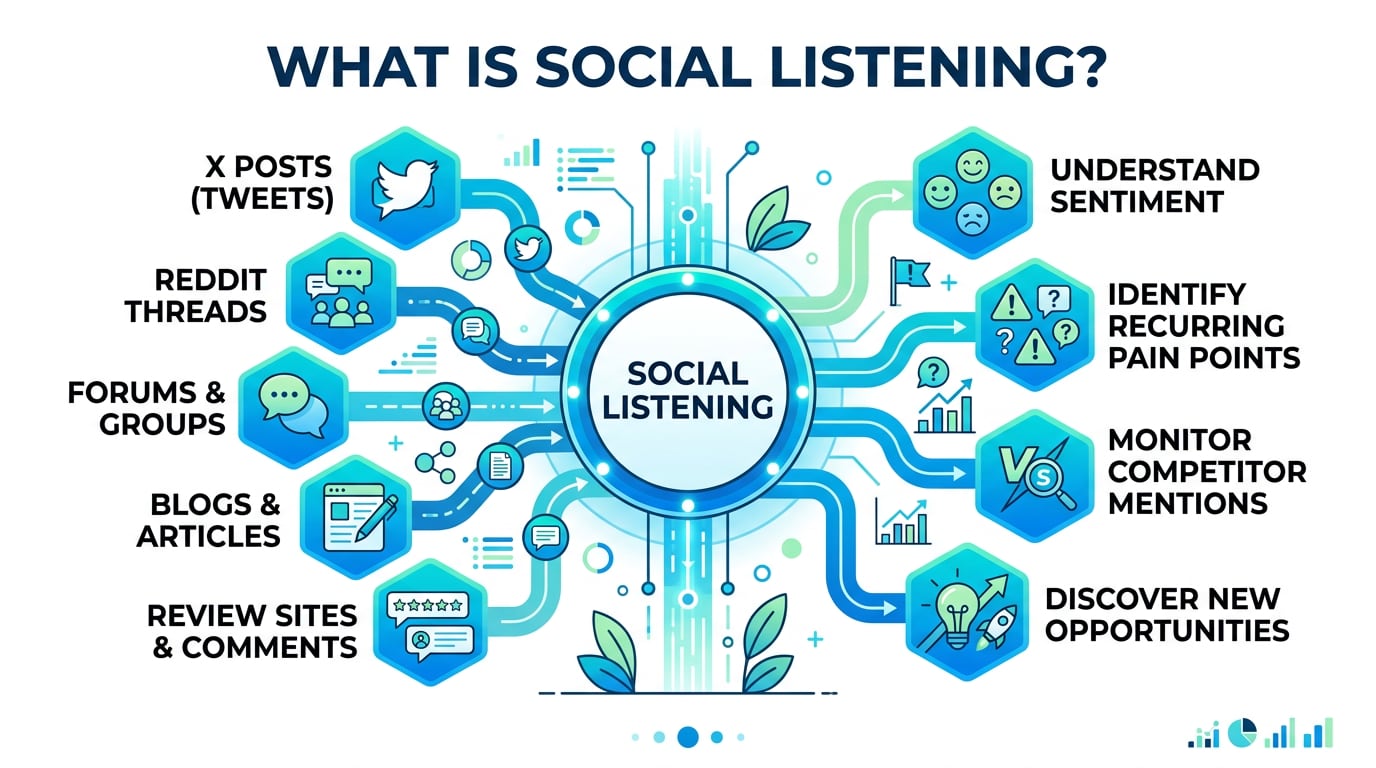
Social listening means you track what people say about:
- your brand
- competitor brands
- industry problems and keywords
Then you take action.
A lot of people stop at tracking. They collect mentions and move on. Social listening is the next step. You turn those mentions into decisions.
For example, you can use it to:
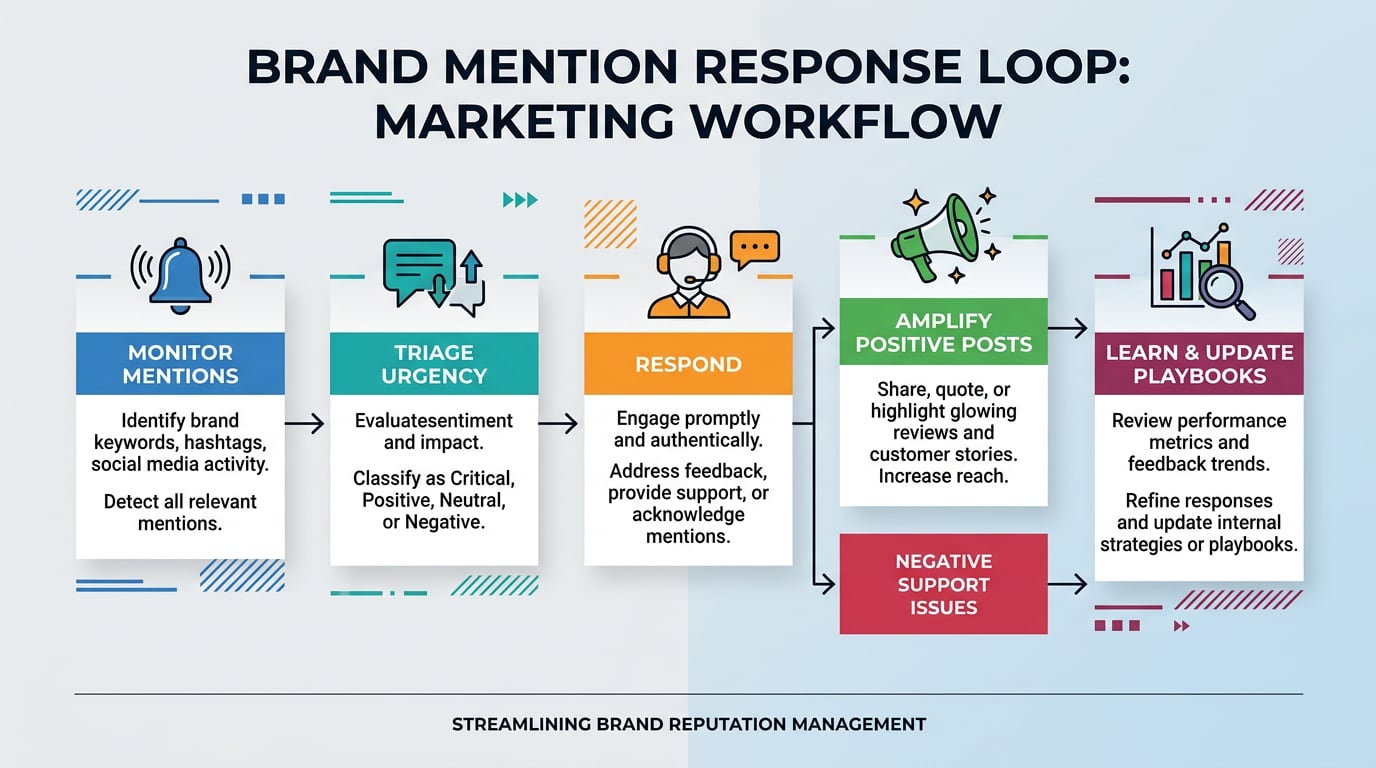
- answer people fast when problems come up
- find positive mentions and amplify them
- spot competitor pain points and position yourself as a better fit
- catch problem-driven keywords before people know your name
When you repeat this every week, you build a compounding growth loop.
How you use social listening for your own brand
Your first priority is your own brand mentions. That includes:
- company name
- product name
- common misspellings
- key feature names
- founder name (if people search by person)
From there, you can run three useful plays.
1) Amplify positive moments
When someone says your product helped them, do more than like the post.
You can:
- thank them in public
- ask a short follow-up question
- repurpose the wording into landing-page copy
- use the theme in future social posts
This helps because people trust language from real users more than polished brand copy.
2) Douse fires early
Complaints can spread fast if you respond late.
When you monitor daily, you can step in with a clear response while the thread is still small. That lowers stress for the person posting and for everyone reading.
Fast response matters. Sprout’s index updates continue to show users expect faster brand replies on social (Sprout Social Index data).
3) Build a trust trail
Most people who buy later never comment first. They read silently.
So every helpful public response does two jobs:
- solves the current issue
- shows future buyers how you handle real problems
That second job is one of the highest-value outcomes of social listening.
How you track competitors and position as an alternative
Competitor listening is where you track:
- competitor brand names
- competitor product names
- comparison phrases like “X alternative,” “X vs Y,” and “best replacement for X”
People are very direct in these threads, especially on Reddit (example thread).
You can use that signal to improve positioning and messaging.
What to look for in competitor conversations
- repeated complaints
- pricing friction
- setup complexity
- support delays
- missing features
How to respond without sounding aggressive
- acknowledge the exact pain point
- explain one clear difference in your approach
- offer a low-pressure next step
- stay respectful
Reddit’s competitive listening guide covers this pattern in more detail (competitor listening guide).
When you do this well, you do not need hype. You use context.
If people keep saying “tool X is too noisy,” your positioning can be “quiet, high-signal alerts.”
If people keep saying “tool Y is hard to set up,” your positioning can be “start in 10 minutes.”
Simple, specific positioning usually wins.
How you track industry keywords and join buying conversations
Brand mentions are valuable. Keyword mentions can be even stronger for demand creation.
You track phrases people use before they know your brand:
- “how do I monitor brand mentions on Reddit”
- “best way to track competitor mentions on X”
- “social listening tool for startups”
- “how to find leads from social discussions”
This captures users at problem stage, not only brand stage.
Why this works
- keyword threads are high intent
- people in these threads are actively evaluating options
- helpful answers build trust before the sales page visit
Reddit-focused listening workflows are useful here because pain-point language is often very explicit (GummySearch guide, F5Bot overview).
A simple reply framework you can use today
- answer the user’s question directly
- give a short, practical checklist
- mention your product only when it fits the exact problem
- close with an easy next action
That keeps your response useful and credible.
Why repeating this leads to more leads and signups
You usually do not get big gains from one comment.
You get big gains from consistency.
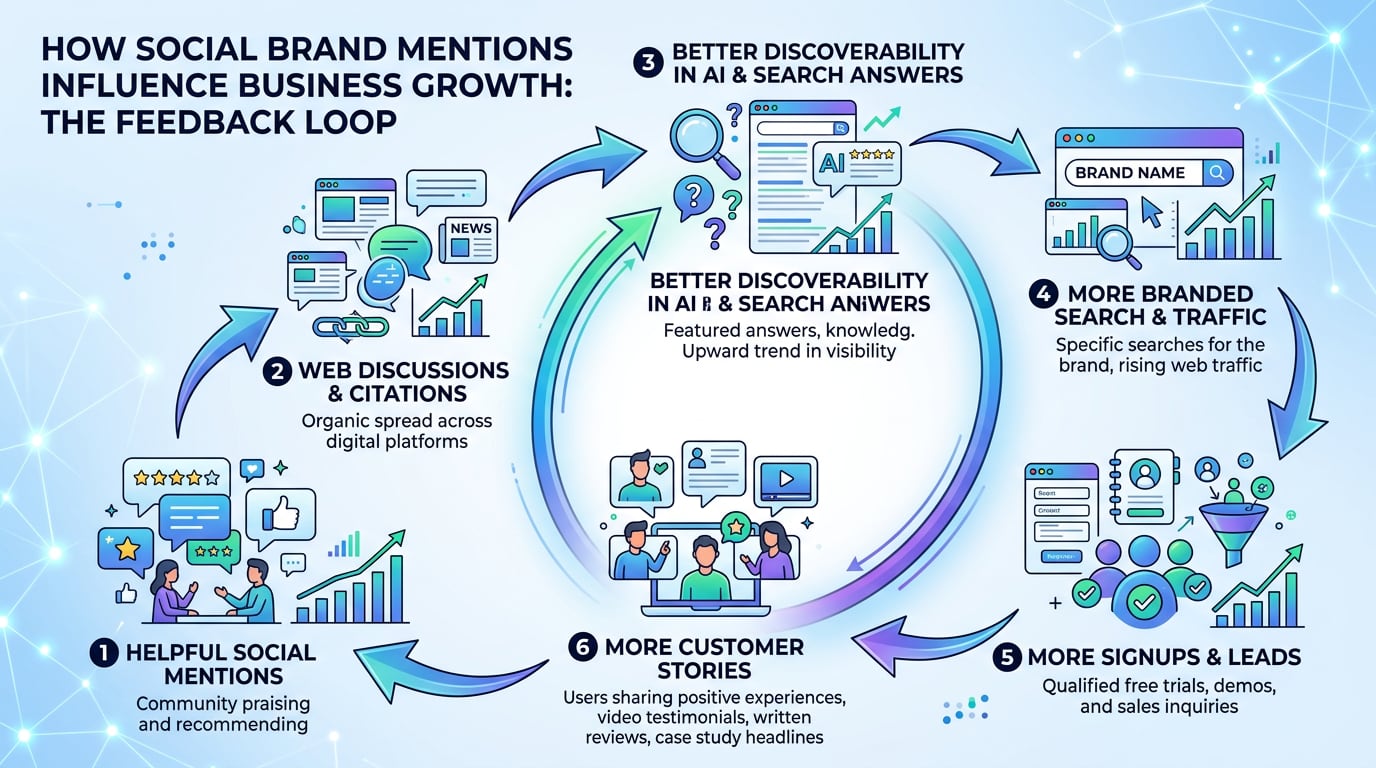
Each useful interaction creates multiple effects:
- the person posting gets help
- everyone reading sees proof you understand the problem
- your brand gets another public mention
- you gather language you can reuse in copy and onboarding
- you improve your future replies and content
Now repeat that daily and weekly.
You start to compound.
A weekly operating rhythm that works
- Monday: refresh keyword and brand tracking lists
- Tuesday–Thursday: respond in high-signal threads for 30 to 60 minutes
- Friday: summarize top themes, update one piece of copy, and capture one content idea
You can also track simple metrics:
- number of qualified conversations joined
- number of clicks to your profile/site
- number of signup assists from social threads
- number of recurring objections resolved in docs/copy
Over a few months, this gives you:
- better conversion language
- better onboarding flow
- stronger category position
- steadier lead flow
How LLM citations can create indirect signup growth
More people now start discovery in AI assistants.
OpenAI describes ChatGPT Search as an experience that can browse the web and include linked sources in answers (Introducing ChatGPT Search, ChatGPT Search help).
This changes the growth model.
When your brand appears in useful social discussions, it can become part of the public web evidence layer that AI systems analyze and cite.
There is no guarantee any single mention will be cited.
But repeated, high-quality public mentions can improve your visibility surface.
How to increase your chance of being part of cited discussions
- post specific answers, not generic comments
- keep your brand and product naming consistent
- contribute in relevant comparison/problem threads
- publish supporting educational pages people can also cite
Think of it as citation readiness. You are creating clear, helpful, indexable proof of expertise in public.
SEO benefits of social brand mentions
A common question is whether social mentions directly affect ranking.
A practical way to think about this is that social mentions usually help SEO through indirect paths.
SEO analysis from Ahrefs explains that social activity can increase discovery, links, and branded demand, even if social metrics are not direct ranking factors by themselves (Ahrefs social signals).
Here are the practical SEO gains you can expect.
1) More branded search demand
When people keep seeing your name in useful threads, they search for you later by name.
Branded queries often convert better than broad, generic queries.
2) More link opportunities
Useful social responses can get picked up by writers, bloggers, and newsletter creators. That can lead to links and references that strengthen organic visibility.
3) Better topical relevance
Social listening gives you exact user language. You can reuse that language in headings, FAQs, and product pages. That improves match between search intent and page content.
4) Better alignment with current discussion-heavy SERPs
Search results in many categories now include more forum and discussion content, including Reddit-heavy surfaces in many studies (Search Engine Land report).
If you never appear in those conversations, you miss discovery opportunities.
If you contribute useful responses often, you create more paths for discovery across social, search, and AI-assisted workflows.
A practical setup you can run as one person
Many social listening guides assume a large organization. You can still do this effectively as one operator.
Use a simple 3-layer setup:
- Brand layer: your product and brand mentions
- Competitor layer: top alternatives and comparison phrases
- Problem layer: high-intent keywords tied to your category
Then add a basic response rule:
- if the thread has clear problem intent, respond same day
- if the thread is praise, acknowledge and amplify
- if the thread is a complaint, respond calmly and quickly
- if the thread is noisy or off-topic, skip
This keeps your effort focused.
You do not need to answer everything. You need to answer the right things with consistency.
Conclusion
Social listening helps you do five useful things at once:
- protect your brand
- improve your positioning
- capture high-intent conversations
- strengthen your SEO support signals
- improve your visibility in AI-assisted discovery flows
If you keep showing up with useful answers, your brand becomes easier to find and easier to trust.
That is what creates compounding growth over time.
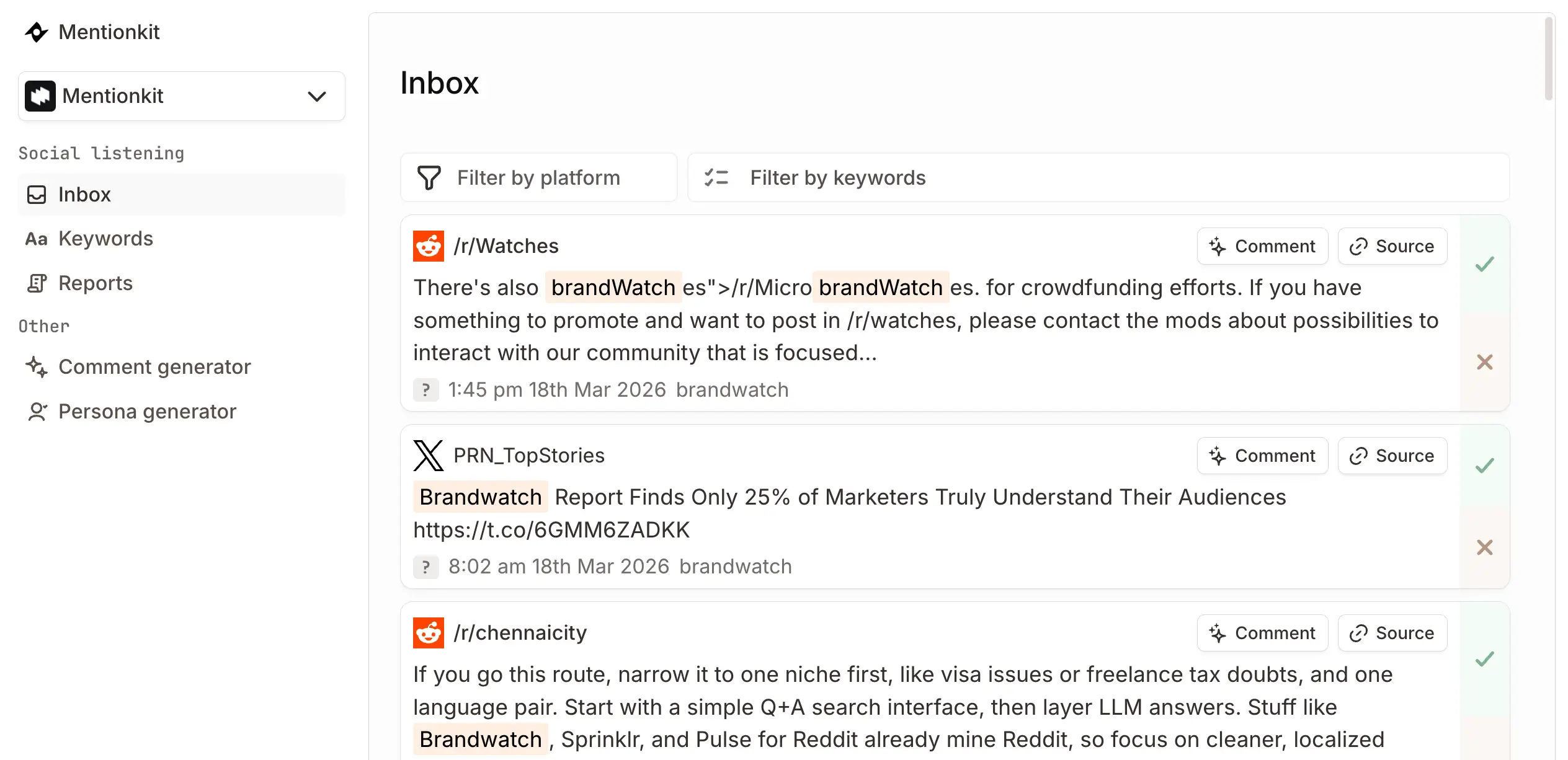
If you want to streamline this process, Mentionkit can help you track brand mentions, competitor mentions, and keyword conversations in one workflow, so you can spend less time searching and more time replying where it matters.