
- 1. Meltwater
- 2. Cision (CisionOne / Communications Cloud)
- 3. Muck Rack
- 4. LexisNexis Nexis Newsdesk (Nexis Media Intelligence)
- 5. Onclusive
- 6. How to Choose the Right Media Monitoring Tool
- 7. Mentionkit
- 8. Talkwalker
- 9. TVEyes
- 10. News Exposure
- 11. Agility PR Solutions
- Top 11 PR Clipping Services Comparison
- Your Next Move From Clipping to Conversation
Most guides to pr clipping services start with a feature grid and stop there. That’s the wrong way to buy this category. The primary question isn’t which platform has the longest list of sources. It’s what job you need the tool to do every day.
Press clipping started as a reporting function. PR teams gathered coverage, packaged it, and proved the work happened. The category still matters for that. In fact, the old manual world was so fragmented that Rick Liebling, working on MasterCard’s public relations during the 2002 World Cup in South Korea and Japan, needed four separate clipping services to track coverage across markets, a moment PRWeek described in its history of press clippings. That tells you something important. Coverage has always been messy. The tools just changed.
Now the decision splits in two directions. One type of platform is built for broad monitoring, executive reporting, and licensed access across print, online, broadcast, and social. The other is built for speed, conversation, and finding intent where buyers ask questions in public. If your team only cares about polished reports, buy the first type. If you also need to protect pipeline, generate replies, and catch demand in forums and social threads, that advice is incomplete.
That’s where this guide differs. It covers both sides of the market, including when to choose a heavyweight suite and when a faster social tool will do more for the business. If you need a quick refresher on the value of earned media, keep that in mind as you read. The right monitoring setup should help you prove coverage and act on it.
1. Meltwater
Meltwater is what I’d put in front of a large PR team that needs one system for monitoring, dashboards, and executive-ready reporting. It’s broad. It covers earned, owned, and social monitoring, and it gives communications teams the kind of visualization layer that makes board updates easier.
The strength here isn’t just collection. It’s packaging. If your team briefs leadership every week, tracks trends across brands, or needs to compare issue volume over time, Meltwater is built for that workflow. It also fits organizations that want optional modules for influencer work, social listening, and API access without stitching together a stack of smaller tools.
Where Meltwater fits best
Two use cases stand out:
- Enterprise reporting: Multi-brand companies that need dashboards, alerts, and share-of-voice style reporting in one place.
- Cross-functional visibility: PR, social, and marketing teams that all need access to the same source stream.
A practical downside is cost and complexity. Meltwater is usually not the best first buy for a lean startup that just wants to know when someone asks for alternatives on Reddit or X. You’ll get depth, but you’ll also pay for depth.
Practical rule: Buy Meltwater when reporting is the product. Skip it when rapid engagement is the goal.
If your team is still refining its alert logic, it helps to understand the basics of brand mention monitoring before you book a demo.
For teams that need a mature enterprise platform, Meltwater is a strong option. Visit Meltwater.
2. Cision (CisionOne / Communications Cloud)
Cision sits in the same enterprise tier, but I’d choose it when licensed content, global monitoring, and comms workflow matter more than simplicity. It’s a serious platform for serious teams. If you need broad coverage across online, print, paywalled sites, broadcast, podcasts, and social, Cision belongs on the shortlist.
The market context supports why tools like this keep expanding. The global Media Intelligence and PR Software Market was valued at USD 10.57 billion in 2024 and is projected to reach USD 27.51 billion by 2032, with a projected CAGR of 14.61% from 2026 to 2032, according to Verified Market Research’s media intelligence and PR software market report. That growth tracks with what comms teams are buying now. Less manual clipping, more integrated monitoring and analysis.
What I’d like about Cision
Cision is built for teams that don’t want a light tool. It offers real-time mention streams, alerts, mobile access, integrations, and enterprise reporting. It also makes sense when global coverage is paramount and your stakeholders expect polished reporting with clear workflows.
A few trade-offs matter:
- Best for larger teams: Small teams can find it heavy if they only need basic clipping.
- Pricing is custom: That usually means you need a real budget and a clear use case.
- Setup discipline matters: Bad queries inside a powerful platform still produce messy data.
Broad coverage only helps if someone on your team owns taxonomy, alerts, and review.
For agencies with multinational clients, Cision can be a good fit. For early-stage teams chasing warm conversations in niche communities, it’s often more platform than they need. See Cision.
3. Muck Rack
Muck Rack is one of the easier recommendations when your team wants pitching and monitoring in the same place. That’s the key distinction. Some platforms are stronger at pure monitoring. Muck Rack is attractive because it connects journalist discovery, outreach, and reporting inside one PR workflow.
I like this setup for agencies and in-house teams that live in media relations all day. You pitch, track coverage, and report without jumping between separate tools. That sounds simple, but it saves real friction. Especially when account teams need to show what landed after a campaign push.
Why teams choose Muck Rack
The appeal is operational, not just technical:
- Unified PR workflow: Journalist database, pitching tools, alerts, and analytics together.
- Strong day-to-day usability: Good fit for teams that need to move from research to outreach fast.
- Expandable coverage: Broadcast and full-text print can be added as needed.
The catch is familiar. Once you start layering on advanced monitoring, the price and scope can climb. That’s normal in this category. The question is whether you need a single PR command center or a narrower monitoring tool.
Muck Rack also works well if your media program is maturing and clipping volume is rising. As a benchmark, startups often generate 1 to 10 press clippings per month, growth-stage companies tend to see 10 to 40 mentions monthly, and enterprise or public companies can generate 50 to 200+ press clippings per month, with launches producing 3 to 5 times normal volume according to KPI Tree’s press clippings benchmark guide. If your team is already managing meaningful volume, Muck Rack’s integrated workflow starts to pay off.
Visit Muck Rack.
4. LexisNexis Nexis Newsdesk (Nexis Media Intelligence)
LexisNexis Nexis Newsdesk is the tool I’d put in front of teams that care about licensed content, compliance, and deep research as much as fast alerts. It’s not the lightest option on this list. That’s part of the point.
If your team deals with regulated industries, legal review, executive risk, or global coverage where paywalled and licensed content matters, Nexis has an edge. The platform is built on a serious content foundation, and that changes the value equation. You’re not just buying notifications. You’re buying access, structure, and confidence in the underlying source base.
Best fit for complex monitoring environments
Nexis tends to win in this context:
- Licensed and paywalled access: Useful for teams that can’t rely on public-web monitoring alone.
- Global depth: Better fit for organizations with international exposure.
- Research-heavy workflows: Strong choice when comms and legal teams both touch the output.
The trade-off is usability. Teams that only need a quick clipping dashboard can find it research-heavy at first. That isn’t a flaw if the organization needs that depth. It is a problem if the buyer just wanted easy social monitoring.
One unresolved issue across the broader category is coverage completeness for paywalls, print, and non-English markets. That gap comes up often, and a lot of content hand-waves it. Prowly’s discussion of press clippings highlights the complexity around print monitoring and paywalled sources, but the market still doesn’t offer clean, universal completeness benchmarks. That’s why teams with strict requirements often lean toward licensed-content platforms like Nexis.
For that buyer, Nexis Newsdesk is worth a serious look. Visit LexisNexis Nexis Newsdesk.
5. Onclusive
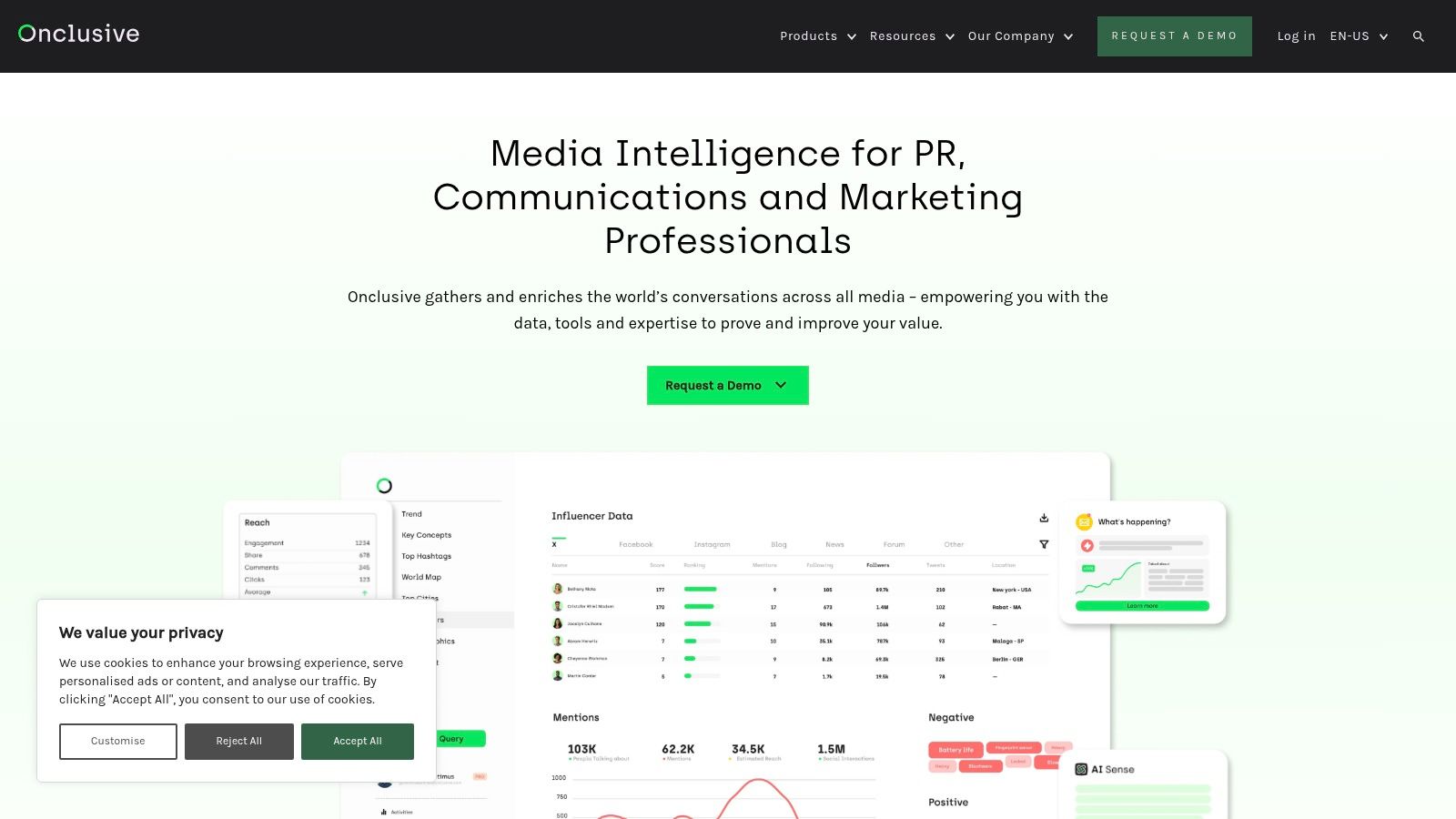
Onclusive makes sense when you want enterprise-grade monitoring but also value managed services and executive-ready briefings. Some teams don’t just need a dashboard. They need someone to help shape what leadership sees. Onclusive speaks to that reality.
Its cross-channel coverage spans online, print, broadcast, podcasts, and social. The broadcast angle is especially relevant for teams that still care significantly about TV and radio. Not every modern buyer does. But if your brand, clients, or stakeholders still treat broadcast as a core reputation channel, that capability matters.
Where Onclusive earns its spot
Onclusive stands out in a few situations:
- Leadership reporting: Teams that need human-curated summaries, not just raw dashboards.
- Broadcast-heavy monitoring: Better fit when TV and radio still carry weight in your comms mix.
- Hybrid operating model: Useful when internal teams want both software and service support.
The downside is predictable. This is not the scrappy choice. It’s enterprise-focused, custom-priced, and usually requires more onboarding than a nimble social listener. If you’re mostly trying to catch product comparisons in Reddit threads or monitor creator chatter, Onclusive is likely too broad.
What it does well, it does very well. It turns monitoring into an executive communication asset, not just a searchable feed. If that’s the job, Onclusive deserves a place on the list. Visit Onclusive.
6. How to Choose the Right Media Monitoring Tool
Most buyers over-focus on source count and under-focus on workflow. That’s how teams end up with expensive software nobody uses well. The right choice starts with one blunt question. Do you need a reporting system, or do you need a tool that helps your team engage and win conversations?
Broad suites are better for executive reporting, licensed media, multi-market coverage, and polished analytics. Agile social tools are better for speed, triage, community engagement, and lead generation. You can use both, but teams should typically know which side matters first.
The questions I’d ask before any demo
- What’s the primary job? If the answer is “board reports,” buy broad coverage. If the answer is “find warm demand,” buy for social intent.
- Which channels matter? A lot of pr clipping services still center mainstream media, while high-intent conversations happen in Reddit, X, LinkedIn, and niche forums.
- Who will use it daily? Analysts, account managers, founders, and community teams need different interfaces.
- What happens after a mention appears? If the answer is “someone replies,” choose a tool with assignment and engagement workflow.
Buying advice: If your team won’t log in daily, don’t pay for a giant suite just because it looks impressive in a sales deck.
The category itself keeps getting larger. The Public Relations Tools Market was valued at USD 6.35 billion in 2023 and is projected to reach USD 13.33 billion by 2030, according to Grand View Research’s public relations tools market analysis. More tools isn’t the same as a better fit.
If you’re sorting categories before evaluating vendors, this overview of public relations software is a useful starting point.
7. Mentionkit
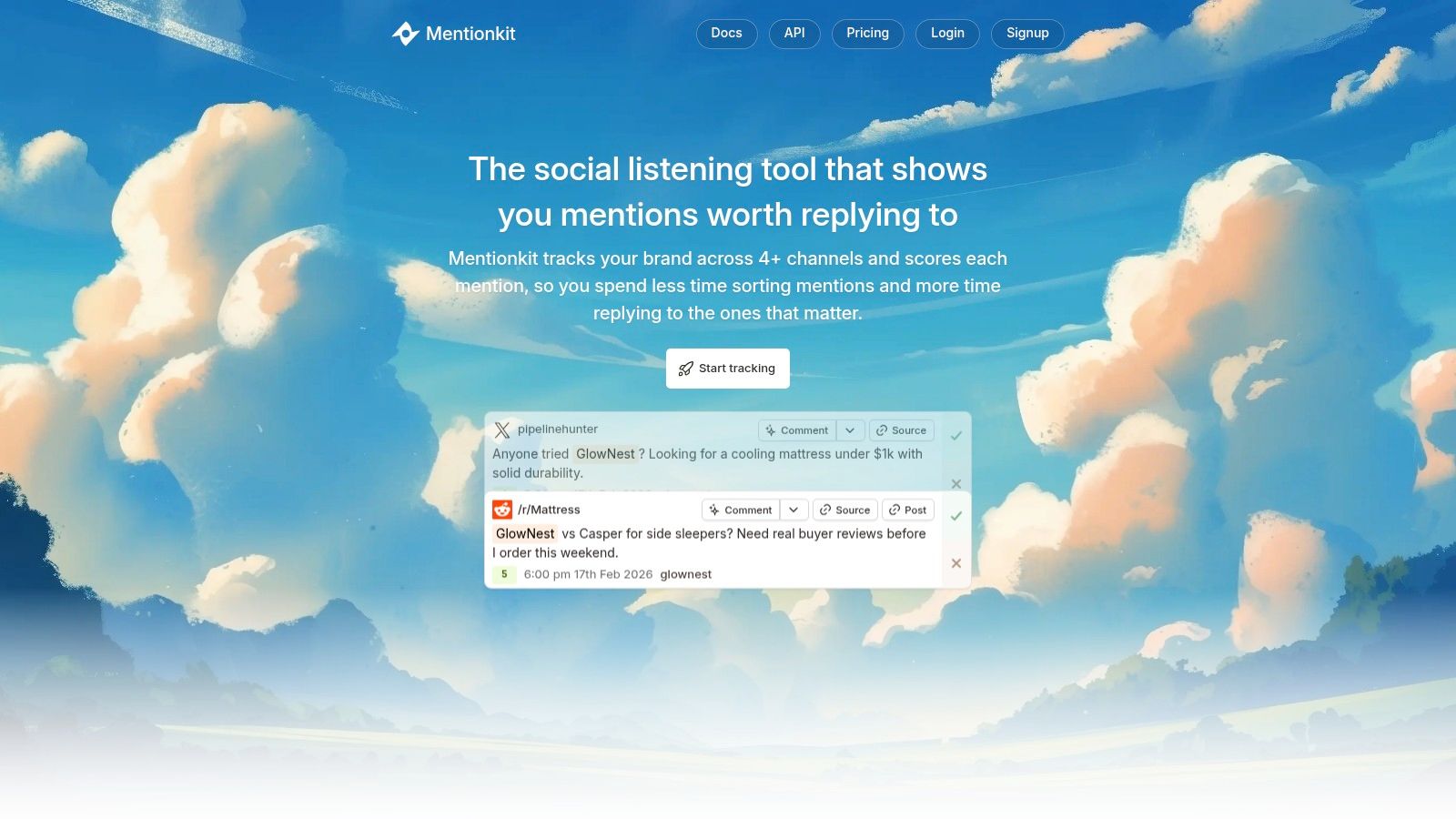
A lot of teams buy pr clipping services for coverage, then realize opportunity lives in the conversations they can join. Mentionkit fits that second job. I’d shortlist it when the goal is engagement, prospecting, and faster response to demand signals across Reddit, X, LinkedIn, Hacker News, and YouTube.
That makes Mentionkit a different type of buy than an enterprise media monitoring suite. Broad-coverage platforms are stronger for formal reporting, executive summaries, and traditional press analysis. Mentionkit is stronger when the team needs to find recommendation threads, competitor comparisons, and problem-aware posts, then act on them inside the same workspace.
Why Mentionkit stands out
The product is built around relevance, not volume.
Mentionkit scores mentions by likely relevance, shows the surrounding context, and gives teams a place to assign, reply, and track status without pushing everything into spreadsheets or separate inboxes. For agencies, that matters. Multi-client monitoring gets messy fast when research happens in one tool, replies happen in another, and ownership lives in Slack messages.
A few strengths are clear:
- Intent-first discovery: Better fit for teams looking for buying signals, alternative searches, and recommendation requests.
- Agency-friendly workflow: Teammate and VA access, ownership tracking, and client organization support day-to-day account work.
- Operational flexibility: API and webhooks help route mentions into the rest of your workflow.
Setup is quick. Add keywords, subreddits, or competitor URLs, then start reviewing conversations that may be worth a response. That speed matters for growth teams that do not want a long rollout.
Faizan, Founder at Docsalot, said tracking competitors with Mentionkit has led to direct sales. Aanart from sourcetomcp.com said Mentionkit caters for founder-led products and helps him monitor product mentions and competitors.
The trade-off I’d weigh
Mentionkit is not trying to be your board-reporting platform. It is trying to help teams catch conversations early and do something useful with them. If your primary requirement is broad press coverage, polished dashboards, and classic clipping reports, look harder at the enterprise suites in this list.
If your team wants to understand the category before buying, this guide on what social listening is gives the right framing.
Here’s how I’d choose. Pick Mentionkit if success means more replies sent, more relevant conversations found, and more pipeline influenced. Pick a broad-coverage suite if success means cleaner reporting across mainstream media, wider archival reach, and executive-ready analytics.
8. Talkwalker
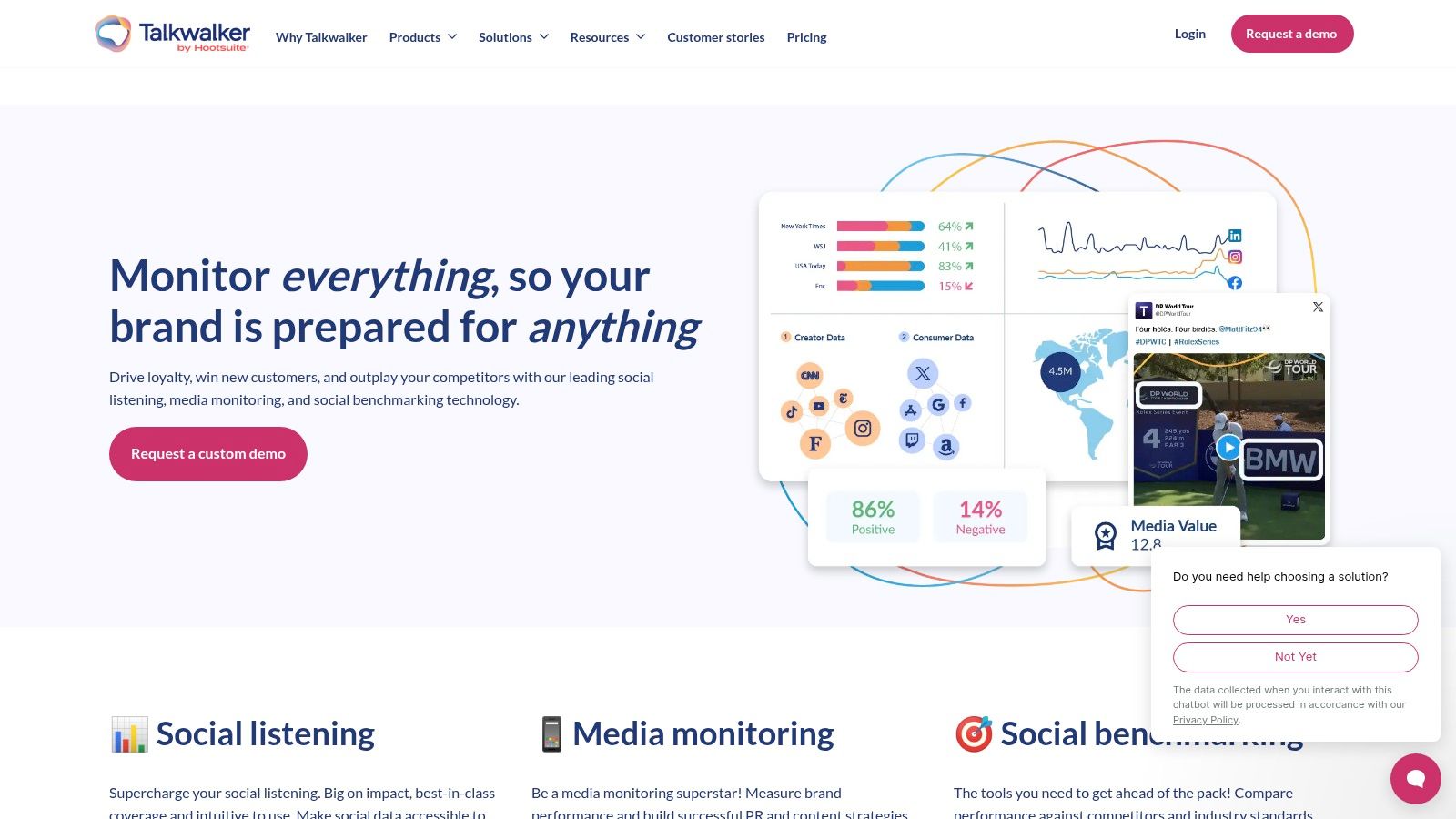
Talkwalker is the option I’d look at when the team wants a hybrid of consumer intelligence, social listening, and media monitoring. It sits between classic PR reporting and broader brand intelligence. That makes it useful for organizations where PR, social, and marketing all need to work from the same stream.
The appeal is the blend. You get dashboards, alerts, sentiment and trend analysis, plus advanced AI features layered on top. For teams handling crisis tracking, fast-moving brand conversation, or global campaign analysis, that combination is powerful.
Who should shortlist Talkwalker
Talkwalker is strongest for teams that need:
- Social and news in one place: Better than splitting traditional monitoring and social monitoring across separate tools.
- Global operations: Useful when language and market spread matter.
- Advanced analysis: Good fit for organizations that want AI summaries and deeper data interaction.
The challenge is overbuying. If all you need is a clean clipping report or a lightweight workflow for community replies, Talkwalker can feel oversized. That’s not a criticism of the platform. It’s a reminder that broad capability usually comes with complexity.
I’d put Talkwalker on a shortlist for brands that treat reputation, social conversation, and media analysis as one operating function. Smaller teams should be honest with themselves before jumping in. Visit Talkwalker.
9. TVEyes
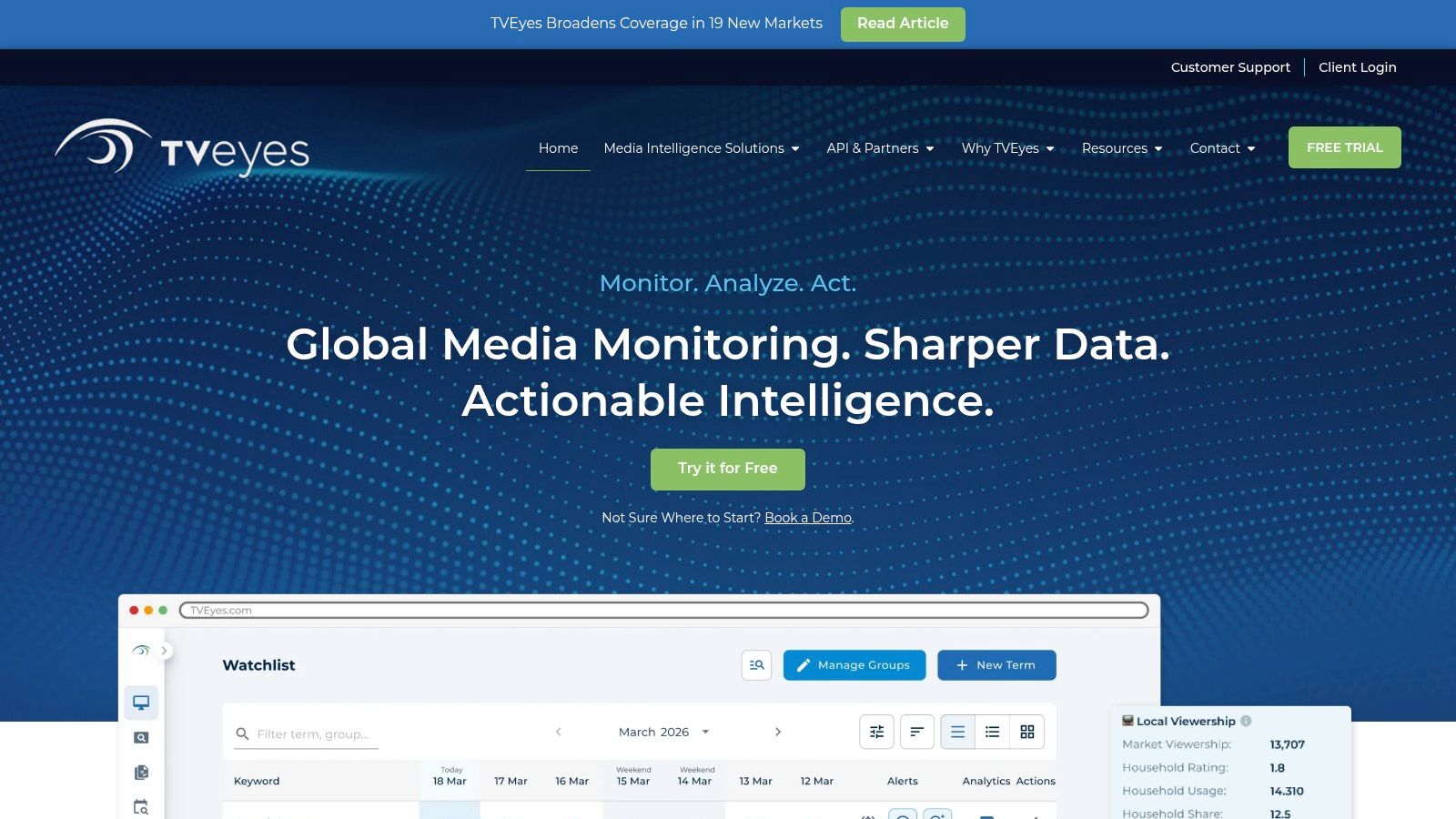
TVEyes is specialized, and that specialization is the whole reason to buy it. If spoken-word media matters to your brand, few general platforms will match a tool built around broadcast, radio, podcasts, and online video monitoring.
A lot of teams forget this until a client asks for TV coverage clips by noon or an executive wants to know where a spokesperson was mentioned on air. At that point, generic media monitoring doesn’t feel so adequate. TVEyes is the kind of tool you add because your workflow demands speed around spoken media, transcripts, and editing.
The case for a specialist
I’d choose TVEyes in these situations:
- Broadcast-heavy PR programs: You need fast alerts and clean clips from TV and radio.
- Podcast visibility matters: Audio mentions need to be searchable and exportable.
- APIs and data feeds are useful: Technical teams can push data into other systems.
The limitation is clear. TVEyes isn’t a full replacement for a broad news and print monitoring suite. It is often paired with another platform. That can be the right move. Best-of-breed often beats all-in-one when one channel matters a lot more than the rest.
Use a specialist when one channel drives decisions, not when you’re trying to simplify everything into one dashboard.
For agencies serving broadcast-first clients or comms teams handling executive media appearances, TVEyes can be the practical answer. Visit TVEyes.
10. News Exposure
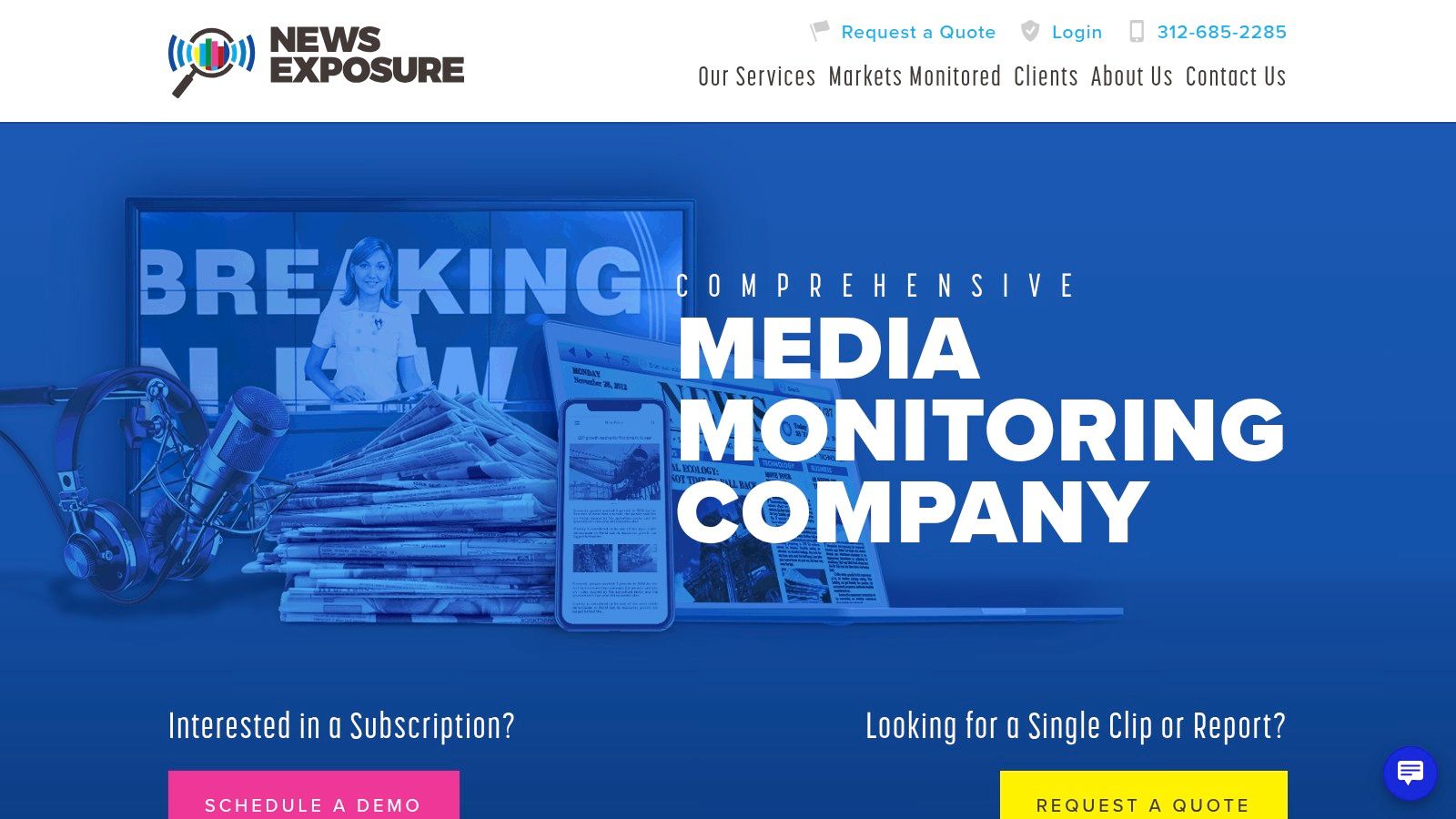
News Exposure is less of a pure SaaS pick and more of a service-first option for teams that want flexibility. That distinction matters. Not every buyer wants another complex platform. Some just want clips, rush turnaround, editing help, and a partner that can handle requests without a long setup cycle.
I’d look at News Exposure if the team has irregular clipping needs or if broadcast work dominates the account. It’s particularly useful when you need one-off support, edited clips, or a U.S.-focused service model rather than a giant self-serve suite.
Why it can be the right fit
A few strengths make it practical:
- Flexible engagement: Subscription monitoring or ad-hoc requests.
- Broadcast depth: Strong fit for TV and radio clipping needs.
- Service support: Helpful for teams that want output, not just software access.
That service orientation is also the trade-off. If you want heavy automation, modern product UX, and broad self-serve analytics, larger SaaS platforms will feel more advanced. News Exposure solves a different problem. It helps teams get deliverables done.
I usually recommend options like this when the internal team is small, timelines are tight, and stakeholders care more about the finished clip package than the underlying platform. Visit News Exposure.
11. Agility PR Solutions
Agility PR Solutions sits in a useful middle ground. It offers media monitoring across online, broadcast, podcast, print, and social, but it also gives agencies and in-house teams tools for briefings, outreach, and analyst-led support. That balance makes it a viable alternative for buyers who find the largest suites too expensive or too rigid.
I’d pay attention to Agility if your team wants broad monitoring with hands-on support and doesn’t need the heaviest enterprise environment on the market. The unlimited topic searches and customizable briefings are attractive for agencies managing multiple brands or issue areas.
What stands out about Agility
The mix is what makes it competitive:
- Balanced feature set: Monitoring, reporting, and media database capabilities in one platform.
- Support options: Analyst-led curation can help lean teams.
- Migration appeal: Useful for teams moving off older providers and wanting something practical.
The main caution is ecosystem depth. Some of the biggest suites offer broader integrations and a more established enterprise footprint. Agility can still be the better choice if your team values responsiveness, flexibility, and a less bloated setup.
I wouldn’t call it the flashy pick. I’d call it the sensible one for a lot of agency and in-house buyers who want enough power without buying a whole comms operating system. Visit Agility PR Solutions.
Top 11 PR Clipping Services Comparison
| Tool | Core focus & key features | Quality (★) | Unique selling points (✨) | Target audience (👥) | Price / Value (💰) |
|---|---|---|---|---|---|
| Meltwater | Broad media intelligence: news, print, broadcast, social; dashboards & analytics | ★★★★☆ | ✨ Enterprise coverage & advanced visualization | 👥 Large enterprises & PR teams | 💰 Quote-based, premium |
| Cision (CisionOne / Communications Cloud) | Comprehensive PR suite: real-time streams, AI risk scoring, broadcast & paywalled sources | ★★★★☆ | ✨ Broadcast + paywalled sources at scale | 👥 Large PR/comms teams & agencies | 💰 Quote-based, enterprise |
| Muck Rack | Journalist database + pitching + monitoring, reporting & alerts | ★★★★☆ | ✨ Pitch-to-report workflow & integrated journalist contacts | 👥 PR teams focused on outreach | 💰 Custom pricing; add‑ons |
| LexisNexis Nexis Newsdesk | Licensed global news, paywalled content, dashboards & compliance controls | ★★★★☆ | ✨ Deep licensed archives & compliance posture | 👥 Legal, compliance & enterprise teams | 💰 Licensing / custom fees |
| Onclusive | Cross-channel monitoring with PR attribution, analytics & optional managed briefings | ★★★★☆ | ✨ Broadcast heritage + curated executive briefings | 👥 Enterprises needing executive reporting | 💰 Enterprise pricing |
| How to Choose the Right Media Monitoring Tool | Decision checklist to match goals to tool categories | ★★★☆☆ | ✨ Goal-focused checklist for buyer alignment | 👥 Tool evaluators & procurement teams | 💰 Free guidance |
| Mentionkit 🏆 | Intent-first social listening & lead gen across Reddit, X, LinkedIn, Hacker News; AI relevance & outreach workflow | ★★★★★ | ✨ AI relevance scoring, fast setup, agency workflows, API & webhooks | 👥 Agencies & in‑house teams hunting warm leads | 💰 See site; competitive / contact sales |
| Talkwalker | Consumer intelligence: social + news monitoring, AI summaries & language coverage | ★★★★☆ | ✨ AI Agent & broad language/source support | 👥 Global PR & marketing teams | 💰 Custom pricing |
| TVEyes | Broadcast, radio, podcast & online video monitoring with transcripts, clipping & APIs | ★★★★☆ | ✨ Best-in-class speech‑to‑text & rich archives | 👥 Teams needing fast spoken‑word monitoring | 💰 Custom by region/volume |
| News Exposure | U.S.-focused broadcast monitoring, HD archive, clip editing & rush services | ★★★☆☆ | ✨ Flexible subscription or one‑off clip services | 👥 U.S. teams needing clip production & fast turnaround | 💰 Subscription / ad‑hoc pricing |
| Agility PR Solutions | Multi-channel monitoring with AI takeaways, briefings and optional analyst curation | ★★★☆☆ | ✨ Competitive migration option with analyst services | 👥 Agencies & in‑house teams seeking balanced toolset | 💰 Custom; social add‑ons available |
Your Next Move From Clipping to Conversation
The wrong PR clipping service usually fails for a simple reason. It solves reporting when the team needs engagement.
That distinction matters more than feature grids do. I’d make this decision based on the job the tool needs to do every week, not the longest source list or the biggest brand name.
Enterprise suites still make sense for teams that live in formal reporting. If you need licensed content, broad media coverage, share-of-voice tracking, broadcast monitoring, and polished stakeholder updates, tools like Meltwater, Cision, LexisNexis Nexis Newsdesk, Onclusive, and Talkwalker are built for that work. They help large organizations standardize coverage review and keep executives, clients, and regional teams on the same page.
A different group has a different problem.
Agencies, SaaS companies, ecommerce teams, and demand gen leaders often care less about clipping volume and more about timing. They need to catch live conversations, spot buyer intent, and respond before the thread goes cold. A weekly report does not help much when someone on Reddit is asking for alternatives, comparing vendors on LinkedIn, or calling out a competitor on X in real time.
Here’s how I’d choose.
Pick a broad-coverage suite if the main goal is:
- Board and executive reporting
- Licensed news, print, and broadcast access
- Coverage tracking across regions or business units
- Formal PR measurement for multiple stakeholders
Pick an agile social listening tool if the main goal is:
- Finding high-intent conversations quickly
- Turning public discussion into pipeline
- Supporting multi-client agency workflows
- Giving PR and growth teams a direct path from monitoring to outreach
That is the line many buyers miss. Broad coverage tools are good at proving what happened. Agile listening tools are better at helping teams act while something is happening.
Mentionkit fits the second camp well. As noted earlier, it focuses on buyer-signal conversations across social and community channels, then helps teams filter noise and move into outreach faster. That makes it a practical option for teams that want PR monitoring to contribute to lead generation, not just reporting.
Choose for your current operating model. If leadership needs coverage proof, breadth wins. If the team needs to join active conversations and turn intent into meetings, speed and relevance win.