- 1. Social Listening and Intent-Based Lead Generation
- 2. Account-Based Marketing
- 3. Community Building and Management
- 4. Content Marketing and Thought Leadership
- 5. Influencer and Partner Marketing
- 6. Email Marketing and Lead Nurturing
- 7. Events and Webinars
- 8. SEO and Organic Search Optimization
- 9. Product-Led Growth and Free Trial Strategy
- 10. Referral and Word-of-Mouth Programs
- B2B Demand Generation: 10-Strategy Comparison
- Your Next Move Start Listening, Then Build
Most advice on b2b demand generation strategies starts in the wrong place. Pick a channel. Set a budget. Launch campaigns. Wait. Then explain weak results by saying the market is crowded or the sales cycle is long.
That approach burns time and cash because it assumes demand instead of validating it.
A better starting point is straightforward. Find where buyers are already talking, asking, comparing, and complaining. If a channel has real conversations about the problem you solve, it deserves attention. If it doesn’t, it probably shouldn’t get your first dollars or your team’s next quarter. That’s why social listening is such a useful first move. It gives you a fast way to scan Reddit, X, LinkedIn, Hacker News, and niche communities before you commit to ads, SEO, webinars, or outbound.
This matters even more in B2B because many of your market isn’t ready to buy right now. The B2B Institute’s 95-5 rule is cited in this overview of B2B demand generation strategies for 2025, which notes that only 5% of the addressable market is actively in market at a given time. If you only chase bottom-funnel buyers, you miss the larger opportunity to spot intent early and build trust before a sales conversation starts.
The strongest teams don’t treat demand gen as a bag of disconnected tactics. They build a system. They listen first, test quickly, double down where intent is obvious, and connect every channel back to pipeline.
If you’re tightening your GTM motion, this guide will help. It covers ten practical plays that work together, from social listening and ABM to webinars, SEO, PLG, and referrals. If you also need the broader operating model behind these tactics, this modern SaaS Go-To-Market Strategy Playbook is a useful companion.
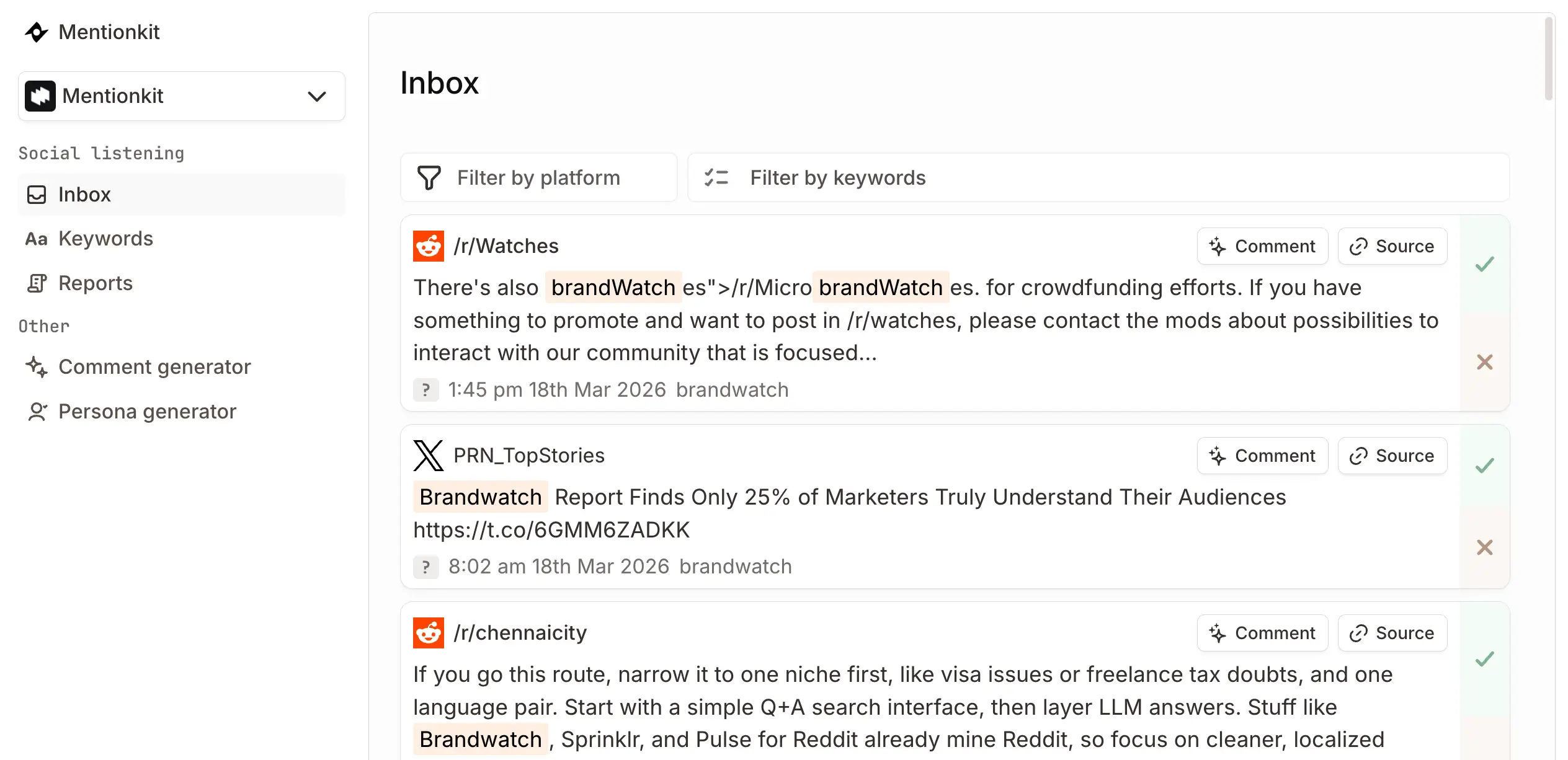
1. Social Listening and Intent-Based Lead Generation
Many teams treat social listening like a brand-monitoring add-on. That’s too small. Used properly, it’s one of the fastest ways to validate channel fit and find warm demand without waiting on ad learning cycles or search rankings.
When buyers ask for recommendations, compare alternatives, or describe a pain point in public, they’re giving you context that many lead lists never have. Reddit threads, LinkedIn posts, X conversations, and Hacker News comments often tell you what the buyer wants, what they’ve tried, what they hate, and how urgent the problem feels.
Why this works early
The biggest advantage is speed. You don’t need a large budget or months of setup. You need a clear keyword list, a way to review conversations, and a process for responding like a human instead of a pitch bot.
Mentionkit is built for this kind of workflow. It tracks high-intent conversations across Reddit, X, LinkedIn, and Hacker News, adds AI relevance scoring, and lets teams route promising mentions into outreach or CRM workflows. If you want a practical framework for turning those conversations into pipeline, this lead generation from social media playbook is worth reading.
A few scenarios where this gets traction fast:
- Alternative searches: A SaaS buyer posts on Reddit asking for a replacement for a bloated incumbent.
- Peer recommendations: A RevOps leader asks LinkedIn for tools that solve a reporting problem.
- Technical evaluation: Developers compare options on Hacker News and expose objections in plain language.
Practical rule: Start broad with pain-point and competitor keywords, then narrow based on which conversations lead to replies, demos, or useful sales conversations.
What good execution looks like
Don’t over-automate the first step. Read the thread. Understand the tone. Then respond with something useful.
Teams usually get better results when they:
- Assign ownership: One person owns Reddit, another handles LinkedIn, so mentions don’t rot in a queue.
- Create response drafts: Keep templates for recommendation posts, competitor threads, and pain-point questions, then personalize.
- Push qualified mentions downstream: Send strong signals into your CRM or hand them to SDRs with the original context attached.
What doesn’t work is barging into every mention with a demo request. Social listening wins because it lets you enter an existing conversation with timing and relevance.
2. Account-Based Marketing
ABM gets overused as a label. In practice, it works only when a team can name the accounts that matter, explain why they matter, and show how outreach changes by account.
That is why social listening should come before heavy ABM buildout. If target accounts are already discussing the pain you solve, comparing vendors, or asking peers for recommendations in public, you have proof that personalization is worth the cost. If those signals are missing, ABM often turns into expensive guesswork.

What ABM looks like when it’s real
Real ABM starts with a short account list, clear buying committee hypotheses, and messaging built for specific roles inside each account. An enterprise software company may need one story for procurement, another for the operational owner, and a third for the executive who signs off on budget. A mid-market SaaS team may only need light customization for tier-two accounts and tighter one-to-one work for a small set of top targets.
Analysts at ITSMA have long documented ABM’s upside, and the ITSMA account-based marketing research hub is a better reference point than recycled roundup stats. The bigger lesson is practical: ABM pays off when selectivity is high and coordination is real.
Useful setup usually includes:
- Defined account tiers: Reserve custom landing pages, direct mail, and executive outreach for the accounts with the highest potential.
- Role-based messaging: Finance cares about payback and risk. Operators care about process impact. End users care about daily friction.
- Shared account reviews: Sales and marketing should review movement, new stakeholders, and engagement signals on a fixed cadence.
Social listening improves each step. It helps teams validate whether an account belongs on the list in the first place, spot active evaluation signals, and refine message angles with language buyers already use in public.
The trade-off many teams miss
ABM is expensive in time, content, and sales attention. If your ICP is loose, the waste shows up fast.
I have seen teams build polished account programs for companies that were never in market. The problem was not execution. The problem was weak account selection. A few hours spent monitoring public conversations around pain points, competitors, and category terms would have exposed that earlier.
ABM also should not stop at net-new logos. Existing customers often have the clearest buying signals, the shortest path to expansion, and more stakeholders to win over. Account-based work is just as useful for cross-sell, upsell, and renewal defense when the opportunity justifies the effort.
Good ABM feels selective. If the campaign could run unchanged across your whole TAM, it is just segmented demand gen.
3. Community Building and Management
Community is one of the most misunderstood plays in demand gen. Too many teams launch a Slack group, Discord server, or LinkedIn community and then wonder why nothing happens.
A community only works when it gives members a reason to come back that has nothing to do with your quarterly pipeline target.
Where community earns its keep
The best B2B communities reduce friction. Users share setups, operators swap playbooks, buyers ask peers for recommendations, and customers help each other faster than support queues can. That’s how trust compounds.
You can see versions of this model in product ecosystems like HubSpot user groups, Notion communities on Reddit and Discord, and Figma’s creator ecosystem. These communities don’t generate demand because the brand talks more. They generate demand because members learn from each other and associate the product with forward motion.
For practitioners, the practical upside is huge:
- You hear buyer language directly: Community posts reveal objections, confusion, and recurring use cases.
- You spot future advocates: The people who help others today often become your best referral partners later.
- You reduce guesswork in messaging: Real questions beat invented persona copy every time.
What doesn’t work
Don’t fill a community with product announcements and call it engagement. People leave when every discussion feels like a disguised campaign.
A healthier approach looks like this:
- Moderate with restraint: Keep quality high without choking discussion.
- Seed useful prompts: Ask members about workflows, templates, mistakes, and tools they’re testing.
- Close the loop publicly: When product or content changes come from community feedback, say so.

One underrated move is using social listening to track community conversations even when you don’t own the space. That’s often better than trying to force buyers into a branded community too early. If your audience already lives in subreddits, Slack groups, or industry forums, meet them there first.
4. Content Marketing and Thought Leadership
Content is not the starting point. Buyer questions are.
That distinction matters because a lot of B2B content programs fail before the first draft. Teams publish what they want to say, then wonder why traffic stalls and pipeline never shows up. Social listening is the faster test. Track the threads, comments, and recurring complaints your market is already posting in public, then build content around that evidence. It is one of the cheapest ways to validate demand before you spend on bigger campaigns or scale distribution.
Content earns its keep when it helps buyers do a hard job: understand the problem, compare options, and justify a decision internally. That is why it still matters in B2B. The Content Marketing Institute’s B2B content marketing benchmarks and trends continue to show that content plays a central role in how B2B teams build awareness, trust, and leads.
Start with market signals, not editorial calendars
Good content strategy usually starts outside your CMS. Look at what buyers keep asking on LinkedIn, Reddit, review sites, sales calls, and support tickets. The patterns show up fast if you pay attention. One objection repeated ten times is usually more useful than a quarterly brainstorm full of guesses.
Use those signals to decide both topic and format:
- Problem-first guides: Help readers diagnose the issue and understand the cost of inaction.
- Comparison pages: Give buyers a fair way to evaluate categories, approaches, or vendors.
- Implementation content: Show the work, the trade-offs, and the rollout steps.
- Operator-led points of view: Publish lessons from people who have done the job, not polished abstractions.
If you are aligning content with positioning and sales motion at the same time, this go-to-market strategy example for B2B teams is a useful reference point.
Thought leadership needs a point of view and proof
A lot of so-called thought leadership is recycled advice with stronger branding. Buyers can tell.
Useful thought leadership does two things. It takes a clear position, and it backs that position with real experience, customer patterns, or strong reasoning. That does not mean every piece needs original research. It does mean bland consensus content will not carry much weight, especially in crowded categories.
One practical test helps here. If a sales rep cannot send the piece to a live opportunity and say, “This explains the issue clearly,” it probably needs more work.
Distribution decides whether the content matters
Publishing alone rarely produces demand. B2B teams need distribution built into the plan from the start. Email, LinkedIn, sales follow-up, founder posts, repurposed clips, and partner sharing usually beat a publish-and-wait model.
The trade-off is simple. Fewer strong pieces with real distribution almost always outperform a higher publishing cadence with no audience plan. For many teams, that means producing less and promoting more.
Write content that makes the next sales conversation shorter, clearer, and easier to win.
What does not work is treating content as a volume game. If the piece is not grounded in buyer language and tied to a clear next step, it turns into shelfware. Social listening helps prevent that. It gives you a quick read on what the market cares about now, so your content program supports demand instead of guessing at it.
5. Influencer and Partner Marketing
Most B2B teams hear “influencer marketing” and picture shallow sponsored posts. That’s not the useful version.
In B2B, partner and influencer demand gen usually looks like trusted distribution. A niche consultant recommends your tool. An agency includes you in client work. A creator with credibility in your category co-hosts a session or reviews your product in public. A complementary software vendor brings you into their ecosystem.
Why this channel punches above its weight
Borrowed trust is hard to beat. Buyers are skeptical of your claims, but they’ll listen differently when a respected operator or partner says, “We’ve used this and here’s where it fits.”
That’s why partnerships often outperform broader awareness campaigns in categories where buyers want validation from peers. Stripe has long benefited from developer ecosystem relationships. Calendly and Slack both gained momentum through integrations and partner distribution, not just direct promotion.
The best starting point is usually closer than teams think:
- Existing customers with audience: Some of your best advocates already have newsletters, communities, or consulting practices.
- Complementary vendors: If you solve adjacent problems, a shared audience already exists.
- Micro-influencers in niche spaces: Smaller, more specialized voices often drive better conversations than broad business personalities.
Keep the model operational
Partner work falls apart when it’s all custom and no process.
You need:
- Clear fit rules: Not every audience overlap creates a good partnership.
- Shared campaign assets: Landing pages, messaging notes, webinar prompts, and follow-up plans.
- Attribution discipline: Tag partner-sourced leads cleanly in your CRM so you know what to repeat.
What doesn’t work is signing logo partnerships for optics. If the partner can’t explain your use case clearly, or if their audience doesn’t have the problem you solve, the campaign becomes noise fast.
Social listening helps here too. It can reveal which creators, consultants, and agency owners already discuss the pain points your product addresses. That makes outreach warmer and partnerships less speculative.
6. Email Marketing and Lead Nurturing
Email gets dismissed because it looks ordinary. In B2B demand gen, ordinary channels often do the hard work.
The job of email is not to “stay top of mind.” It is to move a buyer from one decision to the next while legal, budget, procurement, and internal alignment slow the deal down. That means the right way to judge nurture is revenue impact, as noted earlier in the article, not open rates or click volume in isolation.
The mistake I see often is treating nurture like a calendar. Someone downloads one asset, and the system sends the same five-email sequence every prospect gets. That approach creates activity, but not much progression.
Strong nurture starts before the first email. Social listening helps you hear the language buyers use when they complain about the problem, compare options, or ask peers for recommendations. Use that language in subject lines, email copy, and follow-up offers. It is the fastest way to keep nurture grounded in real demand instead of marketing guesswork.
Match the email to the buying step
Good nurture feels timely because it reflects behavior.
A prospect who attended a pricing webinar needs different follow-up than someone who started a trial and stalled after setup. A champion trying to build internal support needs proof, not another product overview. An account that suddenly shows fresh intent on social or in your CRM deserves a tighter sequence and a faster handoff to sales.
That is why behavior-based email beats fixed drip schedules. Segment, HubSpot, and Calendly do this well. Their emails change when user actions change.
What to tighten first
If email is underperforming, fix the mechanics before writing more copy:
- Segment by intent level: Separate early research leads from active evaluators and product users.
- Trigger from behavior: Use visits, replies, trial activity, webinar attendance, and high-intent engagement signals.
- Give each email one job: Educate, handle an objection, offer proof, or ask for the next step.
- Write for forwarding: Many B2B emails get judged by people who were not on the original send.
- Suppress aggressively: If a lead is cold, stop forcing frequency and wait for a real signal.
Buyers rarely move because of one clever email. They move because each message reduces uncertainty at the right moment.
What fails is generic over-nurture. High frequency, weak segmentation, and broad messaging train prospects to ignore you. A smaller number of well-timed emails tied to real intent usually produces better pipeline and fewer wasted touches.
7. Events and Webinars
Webinars still generate demand because they compress trust. Buyers hear your thinking, see how you explain problems, and assess whether your team understands the work.
The format has matured. The old model was a one-off webinar with a broad topic and a weak follow-up plan. The stronger model is a recurring program with themes, audience segmentation, reusable assets, and sales alignment.
The data backs up their staying power. In an underserved-angle summary on demand gen coverage, webinars are noted as a high-quality lead source, with 53% of marketers citing webinars for the highest-quality leads.
Why webinar programs outperform webinar events
One webinar can create demand. A series builds memory.
That could mean: monthly operator roundtables for one persona, product education sessions for active evaluators, partner-led sessions for adjacent audiences, customer stories for late-stage deals that need proof.
This structure gives marketing more than registrations. It gives sales follow-up material, replay content, clips for social distribution, and recurring objections to address in future sessions.
The follow-up is where teams drop value
Many of the waste happens after the event. Attendees hear something useful, then receive a generic “thanks for joining” email and disappear.
A better workflow:
- Send role-specific follow-up: Segment by persona or behavior.
- Route questions to sales or CS: The Q&A often contains stronger intent than the registration form.
- Repurpose immediately: Turn the webinar into short clips, blog posts, email snippets, and sales enablement material.
If you’re picking topics, social listening is one of the best input sources. It shows which pain points are hot enough to earn attendance before you build the deck. That’s a cleaner process than brainstorming topics in a planning doc detached from real buyer conversations.
8. SEO and Organic Search Optimization
SEO is still one of the best long-term demand channels. It’s also one of the easiest places to waste effort if your keyword strategy is disconnected from actual buying intent.
The mistake is chasing traffic for its own sake. High-volume informational terms may look good in dashboards and still contribute very little to pipeline. The pages that matter most usually sit closer to action: alternatives, comparisons, integrations, implementation questions, pricing-related concerns, and solution-category searches.
Search works best when it mirrors buyer research
Strong B2B SEO content often maps to how evaluation happens: a team realizes a problem exists, someone searches for approaches and terminology, stakeholders compare vendors, technical buyers check setup and compatibility, budget owners look for risk reduction.
The best content libraries support that sequence instead of flooding the blog with unrelated articles.
Social listening helps here because it reveals the exact wording buyers use when they’re confused or evaluating. That’s useful for titles, subheads, objection sections, and internal linking. Search tools tell you what people type. Community conversations often tell you why they’re searching in the first place.
If you’re benchmarking your organic strategy, these B2B SEO statistics add context around traffic, conversion, ROI, and AI search behavior.
What separates useful SEO from content sprawl
A disciplined SEO motion usually has:
- Commercial pages: Comparison, alternative, category, use-case, and integration pages.
- Supporting education: Deep guides that build authority and feed internal links.
- Technical basics: Fast pages, clean structure, and clear next steps.
What doesn’t work is publishing dozens of top-of-funnel articles with no distribution plan and no conversion path. SEO needs patience, but it also needs commercial intent built into the architecture.
9. Product-Led Growth and Free Trial Strategy
PLG can create demand because it lowers the cost of belief. Instead of asking buyers to trust your positioning, you let them test the product.
That sounds straightforward. It isn’t. A free trial or freemium plan only helps when the user reaches value fast enough to care.
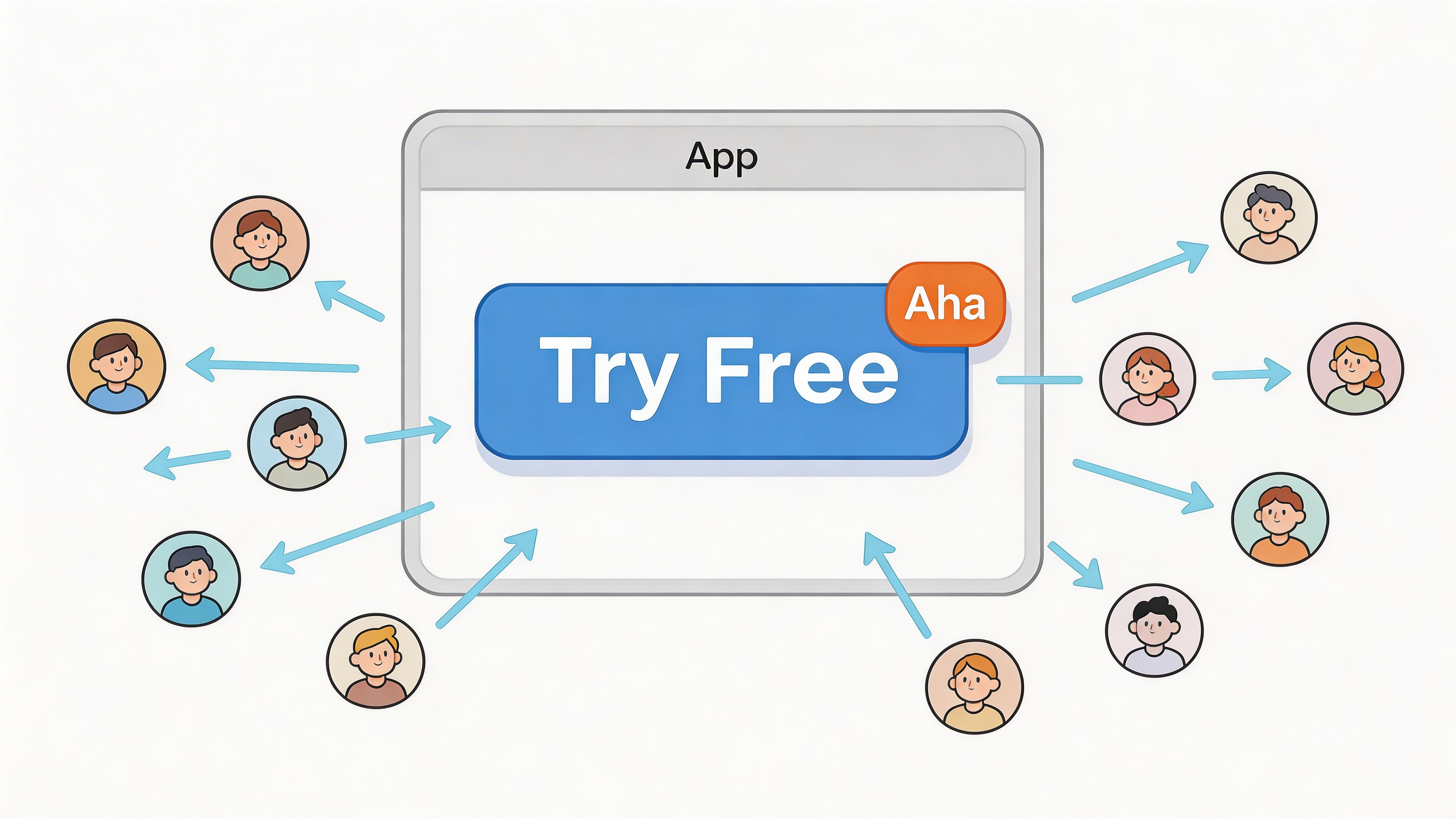
Figma, Slack, Notion, and Calendly all benefited from hands-on adoption loops. Users experienced enough utility to invite teammates, share output, or make the product part of daily work. That’s what strong PLG does in demand generation. It turns product experience into awareness, proof, and expansion opportunity.
The purpose of a trial
A trial isn’t there to show every feature. It’s there to get the user to the first meaningful outcome.
That requires:
- Fast onboarding: The first session should remove setup friction, not add it.
- Clear aha path: Users need one obvious next action.
- Behavior-based prompts: Nudge users based on stalls and milestones, not a generic tour.
If you’re designing a product-led go-to-market motion, this PLG GTM strategy guide is a useful reference point.
The measurement challenge gets harder as teams scale. An underserved-angle analysis highlights the problem of measuring demand gen ROI beyond MQLs for agency-managed and multi-client workflows, especially when attribution, ownership, and collaboration are fragmented across tools. That gap is outlined in this piece on B2B demand generation strategies.
A short walkthrough helps frame the mechanics before deeper planning:
Where PLG goes wrong
Teams often give away access but don’t design activation. Then they conclude PLG doesn’t fit their market.
Usually the problem is one of these:
- Too much complexity up front: Users need setup help before they see value.
- Weak handoff to sales: High-intent trial activity never gets routed to the right rep.
- No upgrade trigger: The user likes the product but can’t tell why paying matters yet.
PLG works best when product data, lifecycle messaging, and sales response operate as one system.
10. Referral and Word-of-Mouth Programs
Referrals look organic from the outside. In practice, the best ones are lightly structured.
Word-of-mouth already happens when customers get clear value and can explain it clearly. A referral program just makes that behavior easier to repeat.
Why referrals stay underrated in B2B
B2B buyers trust peers more than polished messaging. That’s especially true when they’re choosing software that affects process, reporting, revenue, or team workflow. A warm recommendation reduces perceived risk before your sales team says a word.
This doesn’t need to be overengineered. Start with the people already speaking well of you: power users, customers with visible networks, consultants and agency partners, users who have expanded internally.
Social listening helps identify these advocates in the wild. If people already mention your product in recommendation threads or peer discussions, they’re stronger candidates than customers you’ve guessed are happy.
Make the ask easy
Many referral programs fail from friction, not lack of goodwill.
Fix the basics:
- Give advocates language: Short, natural copy beats asking them to invent a pitch.
- Match reward to buyer reality: In some B2B categories, recognition, access, or partner status works better than direct incentives.
- Track lead quality: Referred leads can look great at the top and disappoint later if fit is weak.
The best referral program often starts as a manual process. Identify advocates, make a clear ask, track outcomes, then formalize what proves repeatable.
What doesn’t work is launching a flashy referral portal before you’ve identified who wants to recommend you. Demand generation gets stronger when trust is already present. Referrals package that trust into a repeatable channel.
B2B Demand Generation: 10-Strategy Comparison
| Strategy | Implementation complexity 🔄 | Resource requirements ⚡ | Expected outcomes 📊 | Effectiveness ⭐ | Ideal use cases & tip 💡 |
|---|---|---|---|---|---|
| Social Listening & Intent-Based Lead Generation | Medium: keyword setup, workflows, fast outreach needed | Medium: monitoring tool, integrations, response team | Real-time high-intent leads and higher conversion rates | ⭐⭐⭐⭐ | Best for B2B SaaS & niche communities. Tip: start broad, refine keywords, feed alerts to CRM. |
| Account-Based Marketing (ABM) | High: account research, personalized campaigns, cross-team alignment | High: data, tech stack, dedicated account teams | Predictable, high-value pipeline with longer sales cycles | ⭐⭐⭐⭐⭐ | Ideal for enterprise & strategic deals. Tip: combine with intent signals and sales alignment. |
| Community Building & Management | Medium-High: continuous moderation and engagement programs | Medium: community managers, events, platform costs | Long-term retention, organic advocacy, product feedback | ⭐⭐⭐⭐ | Great for product communities and creator tools. Tip: prioritize authenticity and reward ambassadors. |
| Content Marketing & Thought Leadership | Medium: steady content production and SEO alignment | Medium-High: writers, designers, promotion, SEO tools | Sustainable organic traffic, credibility, long-term leads | ⭐⭐⭐⭐ | Useful across funnels, especially research-driven buyers. Tip: repurpose content and use social listening for topics. |
| Influencer & Partner Marketing | Medium: partner identification, agreements, coordination | Medium: partnership management, co-marketing budget | Amplified reach, third-party credibility, referral opportunities | ⭐⭐⭐⭐ | Works for ecosystem plays and integrations. Tip: start with micro-influencers and track via unique links. |
| Email Marketing & Lead Nurturing | Low-Medium: automation, segmentation, content workflows | Low-Medium: ESP, content, ops resources | High ROI, measurable nurture paths, scalable engagement | ⭐⭐⭐⭐⭐ | Effective for all funnels and PLG onboarding. Tip: segment, automate triggers, and monitor deliverability. |
| Events & Webinars | Medium-High: planning, speakers, promotion and logistics | High: production, promotion budget, staffing | High-quality, pre-qualified leads and authority-building | ⭐⭐⭐⭐ | Best for product launches and thought leadership. Tip: follow up within 24 hours and repurpose recordings. |
| SEO & Organic Search Optimization | Medium: technical and content optimizations over time | Medium: SEO specialists, content, tools | Sustainable high-intent traffic and low long-term CPL | ⭐⭐⭐⭐⭐ | Ideal for search-driven buyer journeys. Tip: target high-intent keywords and monitor rankings. |
| Product-Led Growth (PLG) & Free Trial Strategy | High: product changes, onboarding flows, analytics | High: engineering, product analytics, support | Qualified trial users, lower CAC for self-serve, viral potential | ⭐⭐⭐⭐⭐ | Best for products with clear “aha” moments. Tip: optimize first-run experience and capture intent data. |
| Referral & Word-of-Mouth Programs | Low-Medium: program design, tracking, incentives | Low-Medium: rewards, referral tech, program ops | Very high conversion, low CAC, higher LTV from referred users | ⭐⭐⭐⭐⭐ | Works well with an established, satisfied customer base. Tip: make sharing one-click and reward quality referrals. |
Your Next Move Start Listening, Then Build
The strongest b2b demand generation strategies don’t start with more tactics. They start with better signal.
That’s the common thread across everything in this list. ABM improves when account selection is grounded in real intent. Content improves when it answers real questions. Webinars improve when the topic comes from active discussion instead of internal brainstorming. SEO improves when the page reflects how buyers evaluate. PLG improves when product behavior and follow-up are tied to what users are trying to solve.
Many teams build demand gen in reverse. They choose channels first, then try to force demand through them. That’s how you end up with expensive campaigns, bloated content calendars, and outreach that feels disconnected from what buyers care about right now.
A more practical sequence looks like this.
Start by listening. Scan the channels where your market already talks. Look for recommendation requests, pain-point discussions, competitor frustration, implementation questions, and buying committee chatter. That first pass helps you answer a few questions fast: Is this channel active enough to matter? Are buyers using language we can work with? Are there enough intent signals to justify deeper investment?
Then build around what you find.
If one channel consistently surfaces warm conversations, use it to guide the next moves. Turn those topics into content. Feed named accounts into ABM. Use the same objections in webinar sessions and nurture emails. Build SEO pages around the comparison language buyers use in public. Improve onboarding and trial messaging based on the pain points users mention before signup. Ask happy customers who already recommend you to become structured advocates.
This approach is more disciplined than chasing every trend, but it’s also more adaptable. You don’t need to commit to a massive program before you know whether buyers are there. You can validate first, then expand with confidence.
There are real trade-offs, of course. Social listening won’t replace your entire pipeline engine. It won’t capture every mention, and it won’t remove the need for content, email, events, search, or sales execution. But it’s a strong first filter. It helps teams stop guessing which channels deserve energy and which ones are mostly noise.
That’s what good demand generation looks like in practice. Less channel worship, less vanity reporting, more attention to timing, context, and buyer intent.
If you’re rebuilding your motion this year, keep it simple. Pick a small set of channels. Instrument them well. Tie them to revenue, not just activity. And before you spend heavily, check whether buyers are already talking. If they are, you’ve got a starting point. If they aren’t, forcing the issue usually gets expensive.
Mentionkit is one option for that first step. It monitors conversations across Reddit, X, LinkedIn, and Hacker News, scores mentions for relevance, and helps teams route useful signals into outreach and workflow systems. Whether you use that or another setup, the principle holds. Listen first. Build second. Scale what proves itself.
If you want a simple way to find high-intent conversations before you commit to a channel, try Mentionkit. It can help you monitor relevant discussions, compare where demand shows up, and turn warm social intent into an actionable demand gen workflow.