
Linkedin is a really great plaform for B2B buyers.
If you are selling B2B software, services, or consulting, this is the one platform where buying intent shows up early.
In this guide I’m going over some easy-to-implement strategies to get highly targeted leads.
Strategy 1: Social listening on LinkedIn conversations
This is very simple. You want to track certain keywords on Linkedin using a keyword tracking tool for Linkedin.
For this, I use Mentionkit.
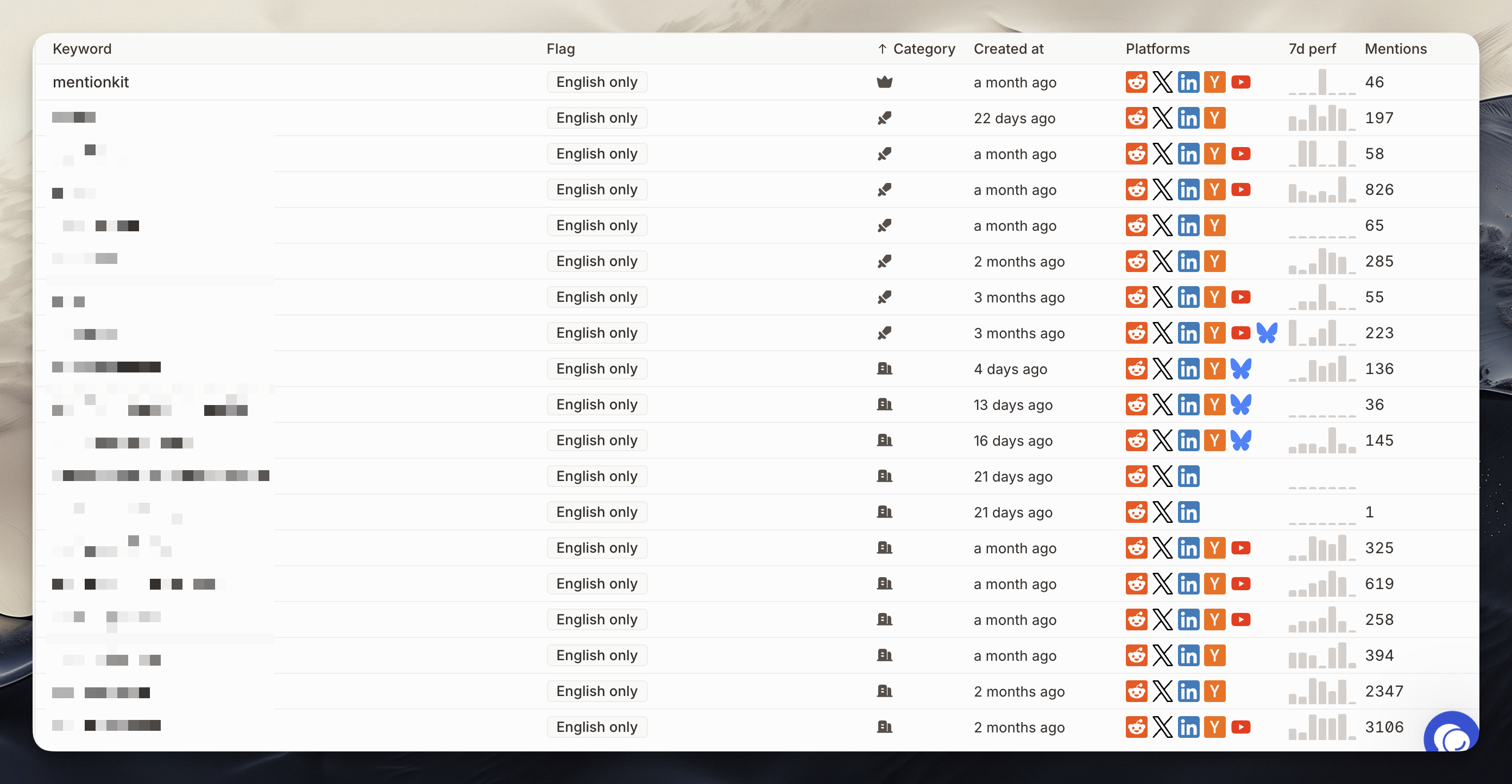
Using Mentionkit, I’ll track:
- Competitor names
- “Alternative to” phrases, eg
semrush alternative - Job-to-be-done terms from our ICP
PS, finding keywords might sound tiring but Mentionkit will give you a list of suggested keywords.
Example keyword clusters:
hubspot alternativeb2b lead gen toollinkedin lead genmonitor competitor mentions
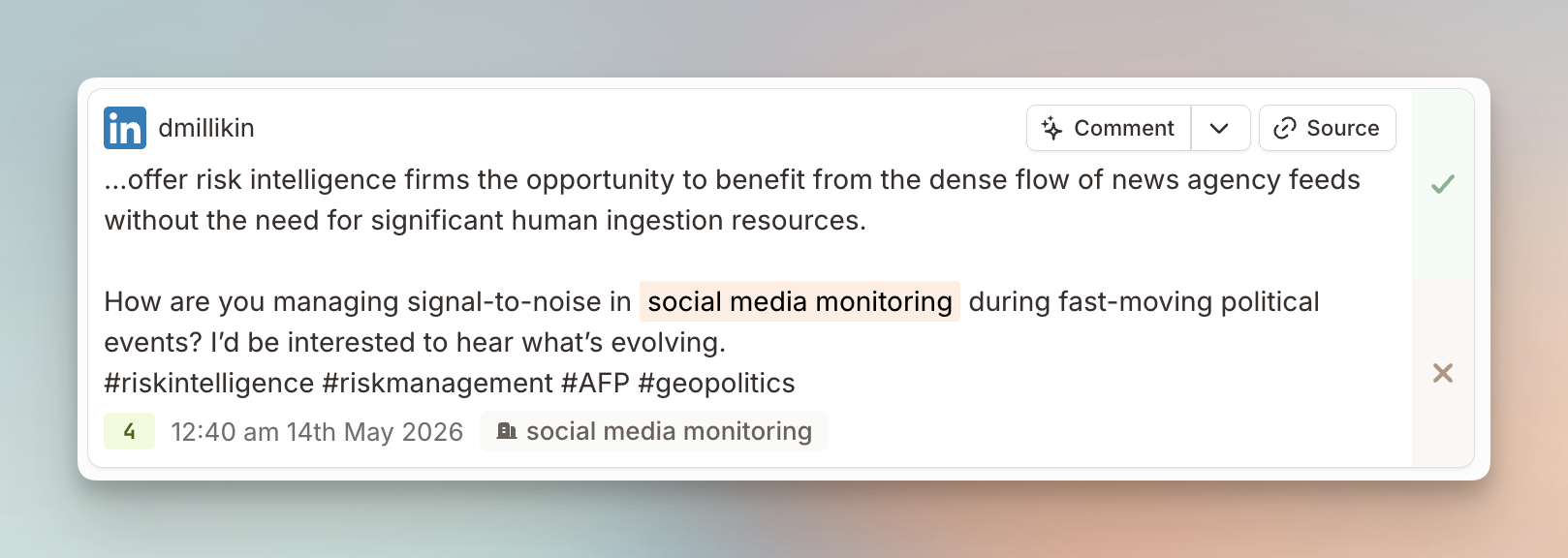
This gives me a stream of posts where people are actively evaluating tools.
That is where the good leads are.
Now whenever someone posts on Linkedin with these words, you’ll get the link to that post.
Strategy 2: DM potential buyers in important threads
Once you have a solid feed, the next step is simple:
- Find high-intent threads
- Identify everyone engaging in that thread
- Reach out fast with context
Inside Mentionkit, I prioritize threads tagged with insight/decision intent and high relevance using Mentionkit’s filters.
Then I DM people who:
- Asked a direct question
- Shared a pain point
- Compared vendors
- Reacted/commented with clear buying context(eg, asking for alternatives, comparing products)
They are warmer leads because they already interacted with the problem in public.
Send a connect request and use this DM structure:
- Reference the exact thread
- Acknowledge their specific pain
- Share one practical idea
- Offer a next step if useful
Short example:
“Hey xyz, saw your comment in the RevOps thread about low reply rates.
If useful, I can share the exact filter setup we use to catch high-intent posts before they go cold.”
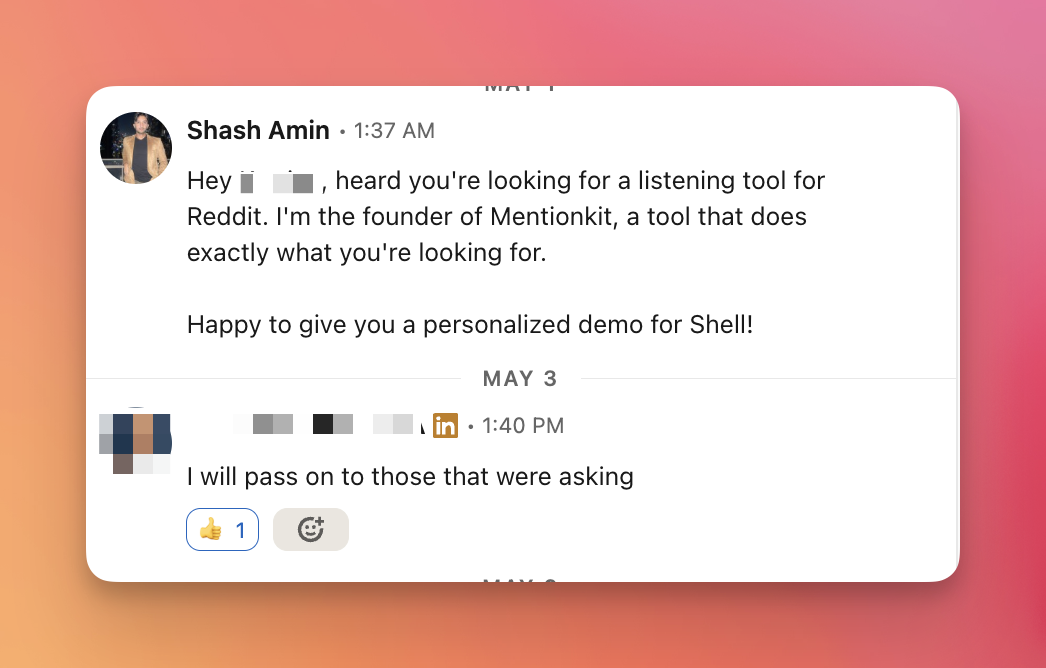
And here’s an example where I’m the warm lead and this person reaches out to me.
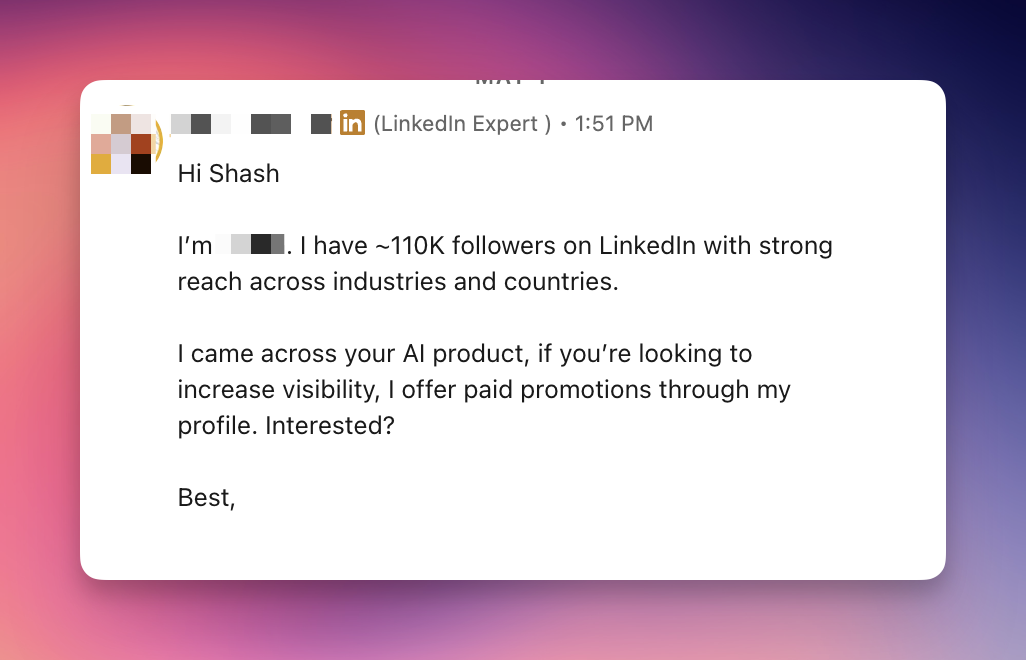
I accept the connect request but haven’t responded as I’m not looking for a influencer outreach right now. But when I am, I’ll ask him his rates.
Strategy 3: Influencer outreach (micro creators first)
Most B2B teams overpay here. They chase large accounts and ignore niche creators with tighter trust.
I prefer smaller LinkedIn creators in the 1,000-5,000 follower range when audience-fit is strong.
Why this works:
- Their audience is usually more focused.
- Comments often include real practitioner questions.
- They are easier to test in small paid pilots.
Typical starting ranges I see for micro creator deals are around $100-$500, depending on niche depth, engagement quality, and deliverables.
If you want a quick way to sanity-check that number before you reach out, use this creator post pricing calculator.
As a reference point, market trackers like Collabed list roughly $150-$250 per sponsored post for 1K-10K LinkedIn creators, with pricing moving up for stronger engagement and B2B niches.
Before paying any creator, run this quality check:
- Open 10 recent posts.
- Read comments manually.
- Check if comments are genuine or AI slop.
- Look for repeated template comments and suspicious engagement spikes.
- Ask the influencer for proof of campaigns.
If comment quality is strong, even a small creator can outperform larger accounts on pipeline impact.
Don’t look for how many comments are there, even 1-2 genuine comments on a post are a very good signal that this person is legit.
Conclusion
LinkedIn B2B lead generation works when you run it as a system:
- Listen first (Mentionkit)
- Prioritize high-intent threads
- DM fast
- Layer creator partnerships with strict quality checks
That’s all to it. You can also apply this same strategy to Reddit marketing with some tweaks.
Do this consistently for a few weeks and LinkedIn becomes a reliable lead-gen source.