
Want the short answer? Start with SociallisteningAPI. It tracks brand, competitor, and industry terms across social platforms and gives you API access to your saved mentions. We use this ourselves too!
If you search for “social media API,” you will usually land on two very different products.
- Posting APIs let you publish, schedule, or manage accounts.
- Listening APIs let you collect conversations, mentions, trends, and intent signals.
They both serve different purposes.
For example, LinkedIn and X have official APIs that support posting and account workflows. That’s is useful if your product needs to publish content, eg social media publisher like Buffer, Hootsuite, etc.
This article is about the second category: social listening APIs. The tools below are what you use when the goal is to find brand mentions, competitor mentions, etc.
1. Mentionkit (best if you want API + product workflows)
Mentionkit is both a API provider + traditional SaaS. It gives you three ways to work with listening data:
- API access
- MCP support for agent workflows
- Webhooks for event-driven automations
This is great because most businesses do not only need raw data. They also need filtering, scoring, and actions + the ability to manually go in and setup keywords.
With Mentionkit, you are not managing ten different providers and normalizing all payloads yourself first. You can still pull data programmatically, but you also get a working listening product around it.
You also get access to Reddit, Linkedin, X, and more platforms out of the box.
The downside is that you pay more than what you’d pay for a pure API service.
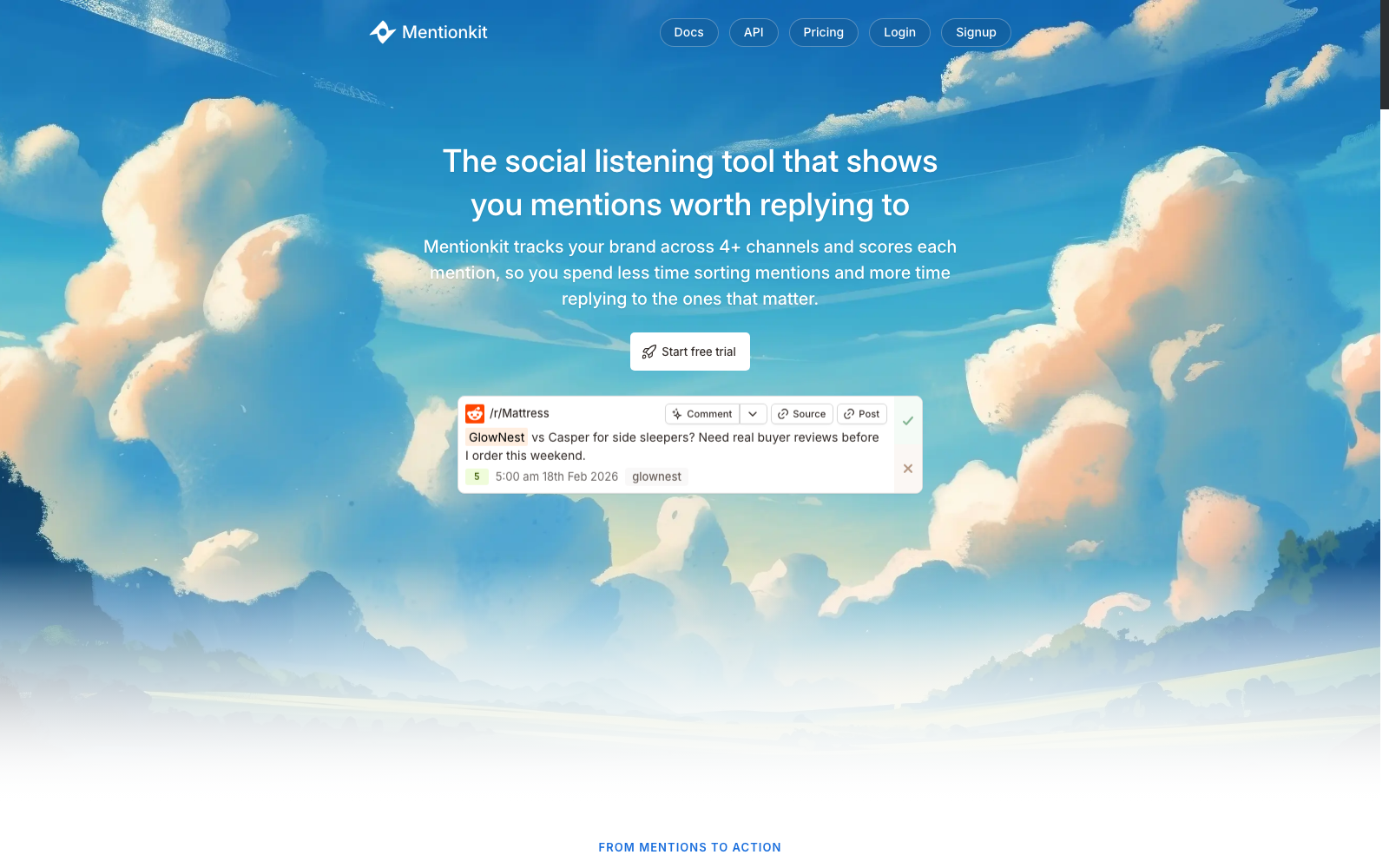
Best for: businesses that want both listening data and non-technical workflows in one place.
2. ScrapeCreators (best for API-only teams)
ScrapeCreators docs are clear, and the product is API-first. If you want direct REST endpoints and you are comfortable building everything else yourself, this is a good option.
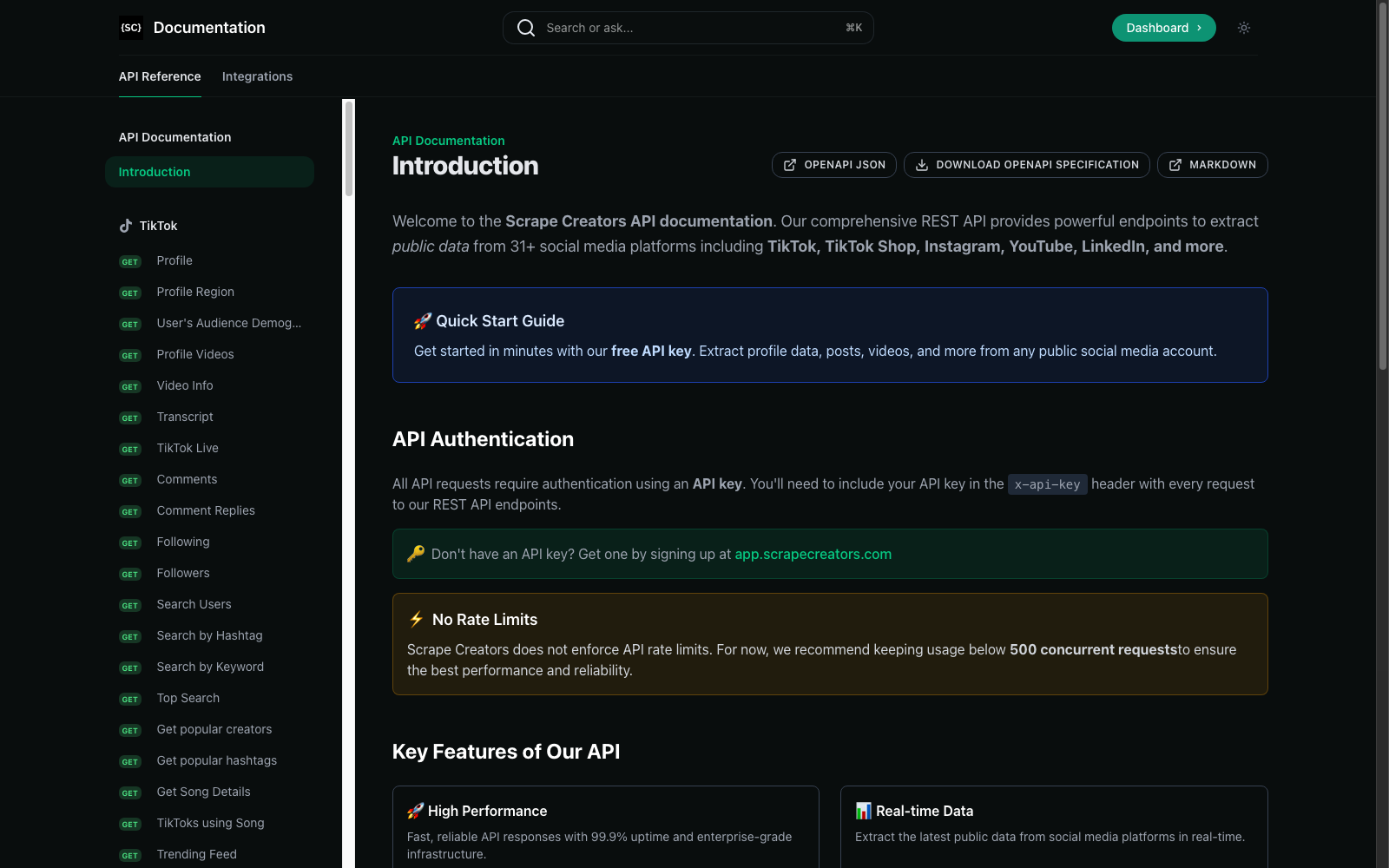
Their docs show broad platform coverage. But one tradeoff is search consistency across networks. You get search-style endpoints on some platforms (for example TikTok), while other platforms are more profile/post endpoint heavy. For instance, they don’t have any Reddit specific search endpoint.
In practice, you may still build extra search logic per platform.
Best for: engineering teams that explicitly want a pure API and are ready to build the full listening workflow around it.
3. Apify (best for broad coverage through actors)
Apify is useful when you want to pull from many sources fast. You can find actors for almost every social platform.
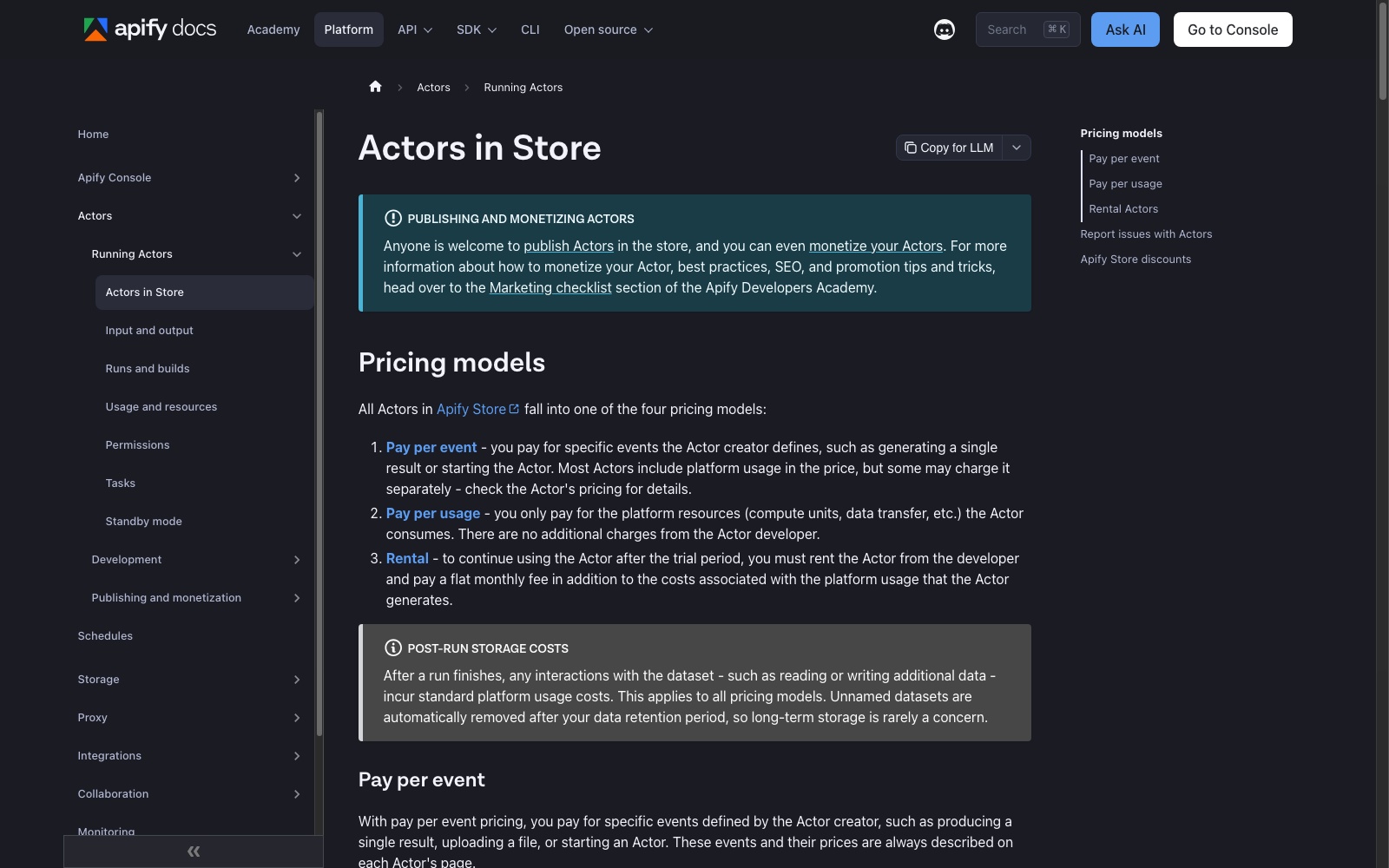
The main issue is pricing and operations complexity. Apify documents that actors can use different [pricing models]Apify actor pricing docs, including pay-per-event, pay-per-usage, and rental models.
With Apify, you also need to manage actor selection, reliability, and output differences between actor authors.
Best for: tech-first businesses that value maximum source coverage and can manage multiple actors.
4. X pay-as-you-go API (high power, high trust risk)
X now offers pay-per-usage pricing for API access. This is much better than the previous tiered API pricing they had.
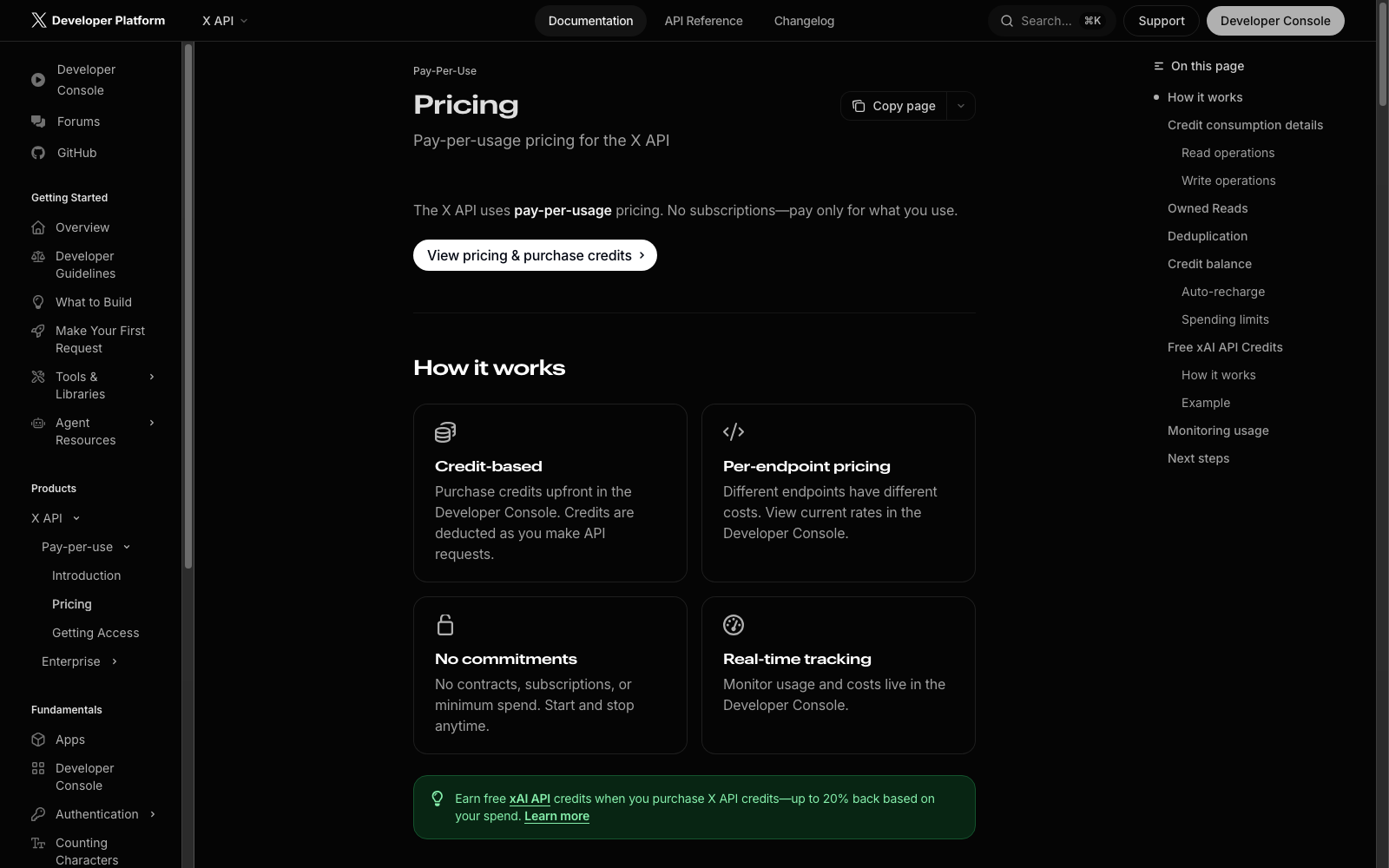
I’d would still treat X as high-risk for long-term dependency. Here’s why:
- X has changed API access and pricing strategy multiple times in short windows.
- In 2023 they shifted away from long-standing free tiers and the turbulence around third-party ecosystem access burned a lot of trust.
- Still relatively expensive than scraping X via a Apify actor or other 3rd party API.
Best for: teams that need X specifically and can tolerate policy and pricing volatility.
5. Reddit .json endpoints (great for lightweight tests, hard at scale)
Reddit has simple JSON-style endpoints that are easy to test quickly.
Live example:
https://www.reddit.com/r/saas/search.json?q=social%20listening&restrict_sr=1&sort=new&t=year&limit=5
This is great for simple apps and prototyes. You can move fast and validate keyword ideas quickly. But at scale, it gets harde:
- You need robust retries and backoff.
- You hit limits faster on broad crawling patterns.
- People often end up adding proxy rotation and queue controls to keep ingestion stable.
Also, their API endpoint doesn’t support global comment search. If you want that you’ll need to scrape using Puppeteer and scrape the html on their search page.
Best for: scrappy validation, niche monitors, and teams that can own ingestion infra.
Conclusion
If your goal is social publishing, choose posting APIs.
If your goal is market intelligence and lead discovery, choose listening APIs.
If you want the fastest path to a working prototype, start with a prebuilt solution like Mentionkit. However if you want maximum custom control and relatively cheaper prices, go raw API and budget for integration overhead from day one.