
Social monitoring is great for tracking your own brand mentions, spying on competitors and more.
However it is underrated as a lead-gen strategy.
In this article I’ll explain how to do lead-gen via social listening using Mentionkit, a social listening tool.
Why this matters now:
- People are active on social every day. Pew found that 84% of U.S. adults use YouTube, 71% use Facebook, and Reddit usage has grown to 26% in 2025. That is a lot of live demand signals in public threads.
- Speed to reply matters more. The Harvard Business Review lead response study found teams responding within one hour were far more likely to qualify leads than teams that waited longer.
- Buyer research is now more self-serve. G2 reports buyers are using peer content and AI research flows heavily before talking to sales.
So yes, lead-gen via social listening works. Let’s get started.
Setup keywords
Find industry specific keywords for your brand. These should be bottom-of-the-funnel keywords.
For instance, if you’re building a SaaS for website analytics, use keywords like “analytics tool”, “website analytic”, etc.
Mentionkit will give you suggestions when you signup, but its worth doing a manual search and see what works best for you.
Also add your competitor’s keywords. This will help find and poach customers off them.
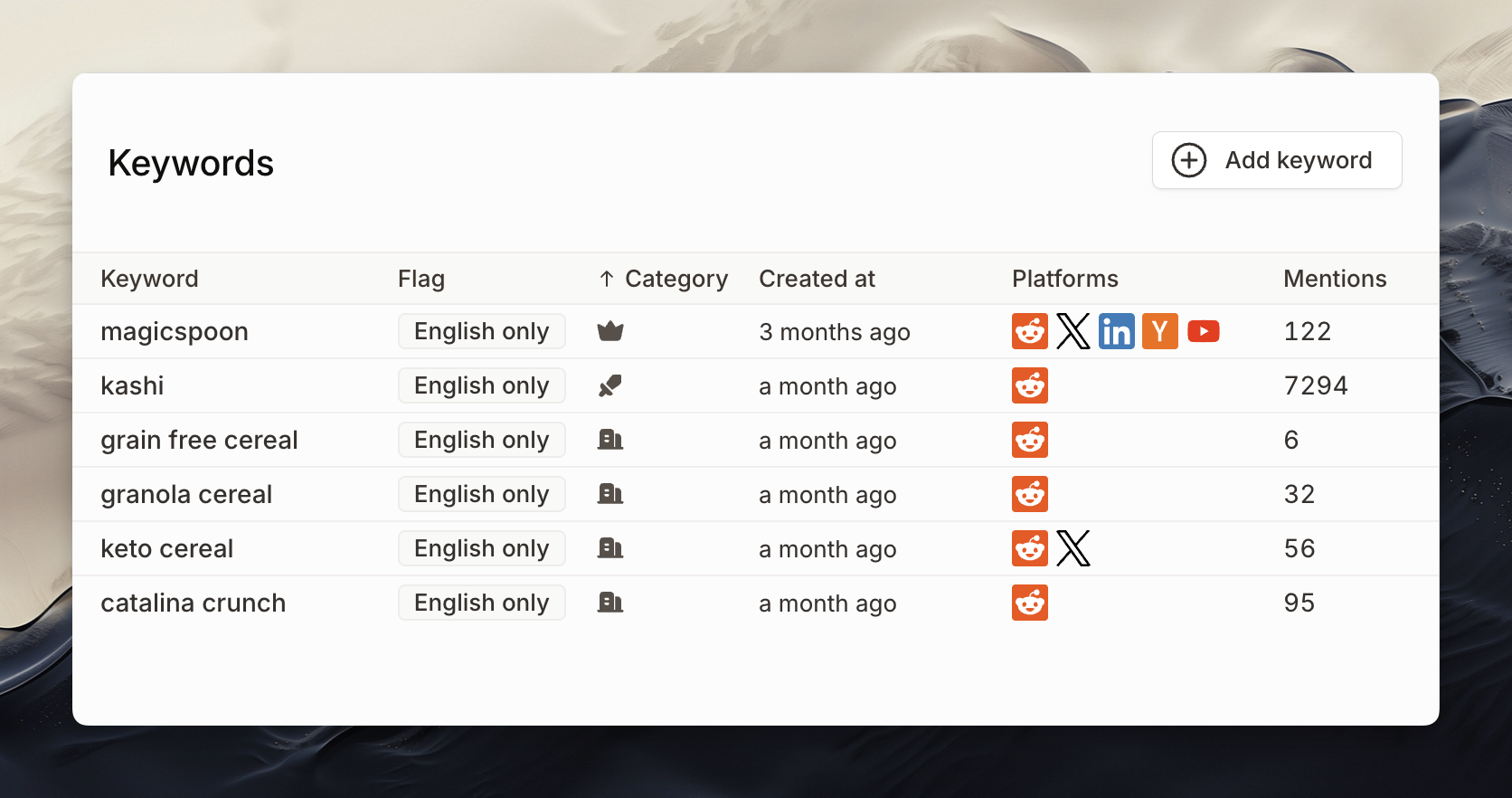
Here’s how my Mentionkit dashboard looks like after setting up keywords:
Strategy 1. Poach competitor’s customers.
We’ve wrote about this in detail here. This is a summary of the tactic.
When someone mentions your competitor in a social media settings, DM them privately and ask them if they are willing to try your product.
If you have a solid offer and a easy way to transition, this works surprisingly well.
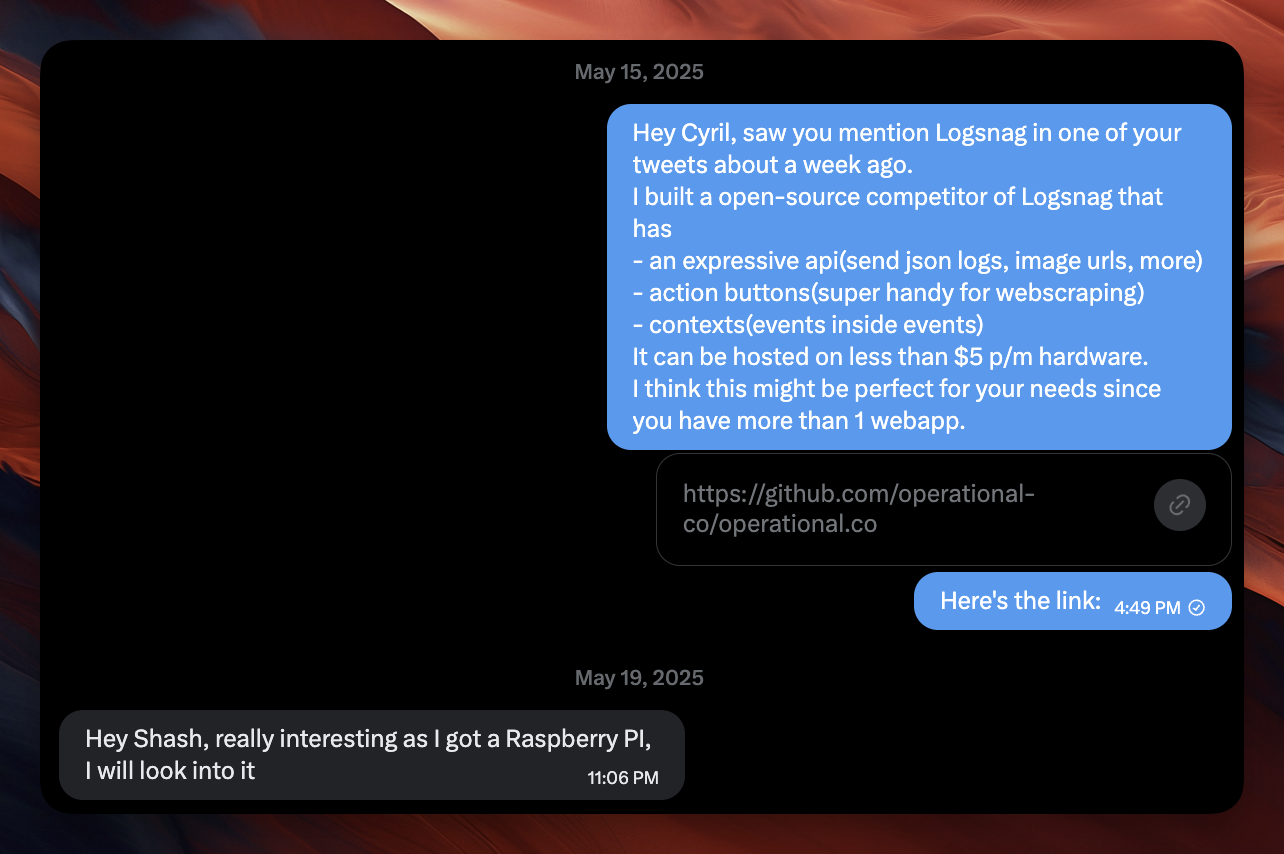
Here’s an example of me poaching users off Logsnag on X:
Do not do this:
- Do not attack competitors.
- Do not drop links with zero context.
Strategy 2. Spread the word
This one is very simple. Take a public forum like Reddit, when someone is talking about a pain point.
In this scenario, I would:
- Post about how my product solves this specific pain point.
- DMs each and every person in the thread. Leaves out obvious not-interested leads
- Does follow-up DMs if they don’t respond.
This is very effective since Reddit(and other forum) content gets indexed over time for SEO and people stumbling upon that pain point will try out your solution.
Here’s me posting about my product on Reddit.
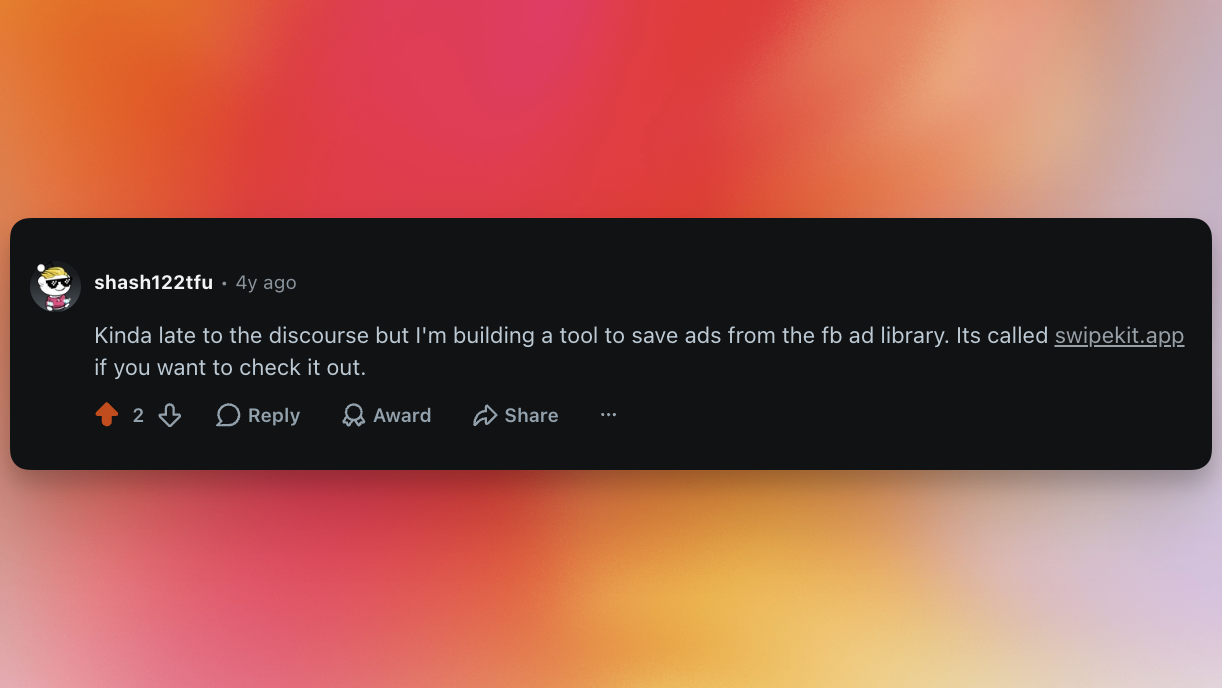
Feel free to explore the thread. This was one of the most high-intent posts for us early on
And you might get a few customers by DMing them.
How to run this as a repeatable workflow:
- Find threads where the user asks for help, not just opinions.
- Reply with 2-3 tactical steps they can do today.
- Mention your product in one line only when it fits naturally.
- Invite next step with low pressure: “If you want, I can share the exact setup.”
- Revisit thread after 24-48h and answer follow-up questions.
- Save winning replies as templates for future mentions.
Strategy 3. Educate the market
This is a low-value strategy but works if done correctly.
To do this, you want to listen to industry terms and find insightful posts where someone genuinely posts good content, usually a workflow.
Then use this process:
- Find strong creator posts in your niche.
- Add one actually useful comment.
- Mention that you run xyz product.
This works because people become curious and check your profile and from there go to your website. Granted it’s not very targeted but doing it again and again works.
Metrics that prove this channel is working
Track this every week in Mentionkit:
- Mentions reviewed.
- High-intent mentions found.
- Keywords with low intents.
From this data you can add/remove keywords and see which strategies work best for your product.
Conclusion
Social listening can absolutely help you find leads. But it only works when you combine:
- Solid keywords, especially industry terms.
- Fast response to posts.
- DMing high-intent users.
- Helpful replies before pitching.
- Consistent weekly review of what converts.
If you run this like a system, not a side task, it becomes one of the most practical lead-gen channels for early and growth-stage teams.