Social listening
Social listening: an easier way to meet customers where they already are
If you’ve ever wished you could be a fly on the wall while people talk about your product, your competitors, or the problem you solve—social listening is exactly that. It’s the habit of tracking public conversations across places like Reddit, X/Twitter, forums, Discords, Facebook groups, product review sites, and even the comments under news articles. You’re not spying—you’re tuning in to open conversations that anyone can read. And once you spot the right ones, you can jump in, be helpful, and earn trust that often turns into new customers.
This isn’t about shouting promos or dropping links everywhere. Social listening works because you show up as a real person with useful answers. You help someone pick the right tool, share how you solved the same problem, or DM to offer a quick screen share. When that help lands, you get a customer and often a fan who keeps talking about you long after the thread is closed.
Below, we’ll walk through what social listening is, how it helps you grow, four practical strategies to set up your tracking, and simple ways to get your team involved—so replies actually happen, day after day.
What social listening actually is (and why it helps you grow)
At a high level, social listening is:
- Tracking a set of keywords related to your brand, your competitors, and the problem you solve.
- Spotting live conversations where people are asking for help, comparing tools, or venting.
- Responding with something useful: a quick answer, a link to a guide, a short video, or an offer to DM and help one-on-one.
- Following up with people who showed interest.
Why it works:
- You catch people at the right moment. If someone posts “Is there a simple way to track mentions without paying $300/mo?” they’re already warm. You don’t need to “create demand”—you just meet it.
- Trust shows up before the sale. Helpful, plain-English replies make you look honest and human. That alone stands out in a sea of canned pitches.
- You learn from raw, unfiltered feedback. Threads reveal pain points, confusing bits in your onboarding, pricing pushback, the exact words your market uses, and what “good enough” looks like.
- You build a steady stream of leads. Not every reply leads to a sale, but enough do—and the cumulative effect adds up.
Four strategies to track brand words, competitor keywords, and industry jargon
Think of your tracking setup as a few “buckets” of keywords. You want coverage without drowning in noise. Here are four battle-tested strategies that keep your feed useful and focused.
1) Brand words: catch praise, complaints, and questions early
What to track
- Your brand name (exact and common misspellings)
- Your product names and old names (if you renamed)
- Domain and short forms (e.g., “mentionkit”, “mention kit”, “mentionkit.com”)
- Team members who get tagged, including your founder’s handle
Why it matters
- You’ll answer questions before they go stale.
- You’ll catch “this broke for me” posts and fix them before they spread.
- You’ll find fans who will happily share a quote or case study.
Tips
- Add misspellings on purpose (“mentoinkit”, “mentionit”), and remove false positives with simple “NOT” terms (e.g., exclude a sports team or unrelated app that shares your name).
- Track untagged mentions. Many people say “I tried MentionKit” without an @.
What to say
- Public reply: “Thanks for trying us! DM me your email and I’ll help fix this right now.”
- Quiet DM: “Hey! Saw your comment about alerts being late. If you’re up for it, I can check your setup and speed things up.”
2) Competitor keywords: be helpful without being spammy
What to track
- Competitor brand names and product names
- “ alternative,” “like ,” “switching from ”
- Common complaints tied to those competitors (“pricing,” “caps,” “limits,” “support”)
Why it matters
- People comparing tools are in buying mode.
- A friendly, neutral reply that teaches something usually gets a welcome response.
How to reply
- Stay positive. Avoid dunking. Give a short, honest comparison and one concrete reason to try you.
- Offer to DM details if the thread is touchy.
Example
- Public reply: “If you’re looking at alternatives, one difference is our alerts hit within minutes for Reddit and X. Happy to share a quick setup video if helpful.”
- DM: “Can I ask what you’re missing today—speed, price, or coverage? I’ll be straight and tell you if we’re not a fit.”
Noise control
- Add negative keywords to avoid unrelated chatter (e.g., a competitor that’s also a band or a game character).
3) Industry jargon: map the problem space, not just brands
What to track
- Problem phrases: “how to find brand mentions,” “people talking about us,” “reddit monitoring,” “twitter alerts”
- Job-to-be-done phrases: “get notified when someone asks,” “catch leads from reddit,” “track product feedback”
- Outcomes: “get first customers,” “catch buyers early,” “see what competitors are doing”
- Tool-agnostic terms people use when they don’t know what to search for yet
Why it matters
- These are the earliest signals of demand. People aren’t naming tools yet—they’re describing the job.
- You’ll find threads where a short guide or checklist gets saved and shared.
Reply moves
- “Here’s a 4-step way to do this for free to start… If you want it done for you, we can help too.”
- “We tried 3 methods—RSS, custom scripts, and a tracker. This is what actually caught 90% of mentions.”
Tracking tip
- Pair jargon with verbs to reduce noise: (“monitor” OR “track” OR “alert”) AND (“reddit” OR “x” OR “twitter”)
4) Buying signals: catch the “ready right now” moments
What to track
- “Looking for,” “recommend,” “what do you use,” “worth it,” “any good,” “pricing”
- “Alternative,” “instead of,” “replace”
- “We need,” “client asked,” “boss wants,” “deadline”
Why it matters
- These phrases concentrate high-intent threads. You can read the whole thing and reply in under five minutes.
Reply pattern
- Keep it short, answer the question, include one reason, and invite a DM for details.
Example
- “If timing is your main issue, look for tools that send alerts within minutes (not daily digests). Happy to show how we do it if you want a quick screen share.”
Getting your team to actually use social listening (and turn it into customers)
Even the best tracking setup fails if no one replies. Here’s how to make it simple for your team and keep it going week after week.
Set a light daily rhythm
- Who watches what: Assign “Brand,” “Competitors,” and “Jargon” to 1–3 people. Keep ownership clear so nothing slips.
- Reply window: Aim to respond within 6 business hours for high-intent threads, 24 hours for everything else.
- Daily sweep: Do two quick sweeps—late morning and late afternoon—so you’re timely without living inside feeds.
Keep replies short, kind, and useful
A helpful reply is usually 3–6 lines:
- Acknowledge the question or problem.
- Give one practical tip or direct answer.
- Offer a next step (a link, a short video, a DM).
Examples
-
Comparison thread:
“If your priority is speed on Reddit, look for near-real-time alerts + keyword rules to cut the noise. We ship both. If you share your use case, I can suggest exact filters.”
-
Frustration post:
“That’s annoying. Two quick things that prevent missed mentions: add misspellings and exclude common false positives. If you want, send a few of your keywords and I’ll tune them.”
-
General request:
“We track Reddit and X in minutes, and you can set ‘include’ + ‘exclude’ rules so it stays clean. If you send one example thread, I’ll set up a sample for you.”
Use DMs the right way
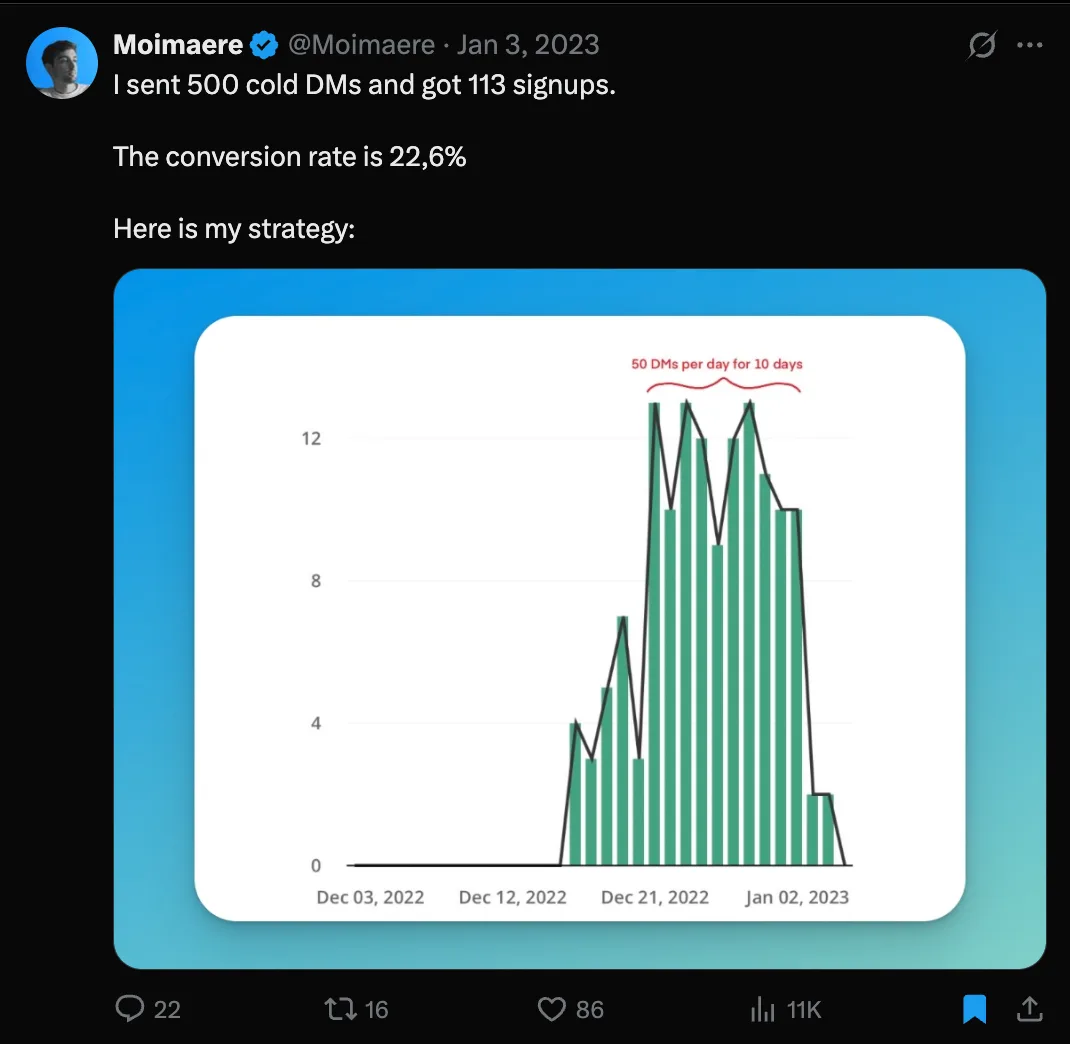
DMs work when they feel like help, not a pitch. Keep it personal and aimed at one outcome.
DM template
Hey <name> — saw your post about tracking mentions for clients.
If you send me 3–5 keywords + one competitor, I’ll set up a sample alert and show you what it looks like.
If it’s not what you need, no worries.
Follow-up cadence
-
If they reply, book a quick call or send a short loom.
-
If no reply, nudge once 48–72 hours later:
“Quick nudge—still happy to set this up if you want to try it.”
Make it easy to share context internally
-
Create one #social-listening channel where your tracking tool posts new hits.
Add simple emoji rules: ✅ replied, 🤝 in DM, 💬 needs input, 📌 important thread.
-
When someone closes a DM or lands a trial, drop a one-liner:
“DM → trial: wanted faster Reddit alerts + filters for false positives.”
Keep a tiny library of helpful stuff
You don’t need a binder. A single doc with:
- 5 common questions and great short answers
- 3 demo looms (setup, filtering, team notifications)
- 2 light case snippets (before/after with a concrete outcome)
Let anyone on the team grab and tweak these in their own voice.
Measure just enough to know it’s working
Once a week, look at:
- Threads replied to
- DMs started
- Trials or calls that started from a thread
- Wins and lessons (what confused people, what answer landed)
You can track this in a simple spreadsheet. The goal isn’t perfect data—it’s learning what to reply to faster next week.
Practical keyword setup (quick start)
If you just want to get going today, use this starter set and tune from there:
Brand bucket
mentionkit OR "mention kit" OR mentionkit.com- Add 2–3 common misspellings
- Exclude unrelated terms if your brand overlaps with other topics
Competitor bucket
"competitorname" OR ("competitor name" AND (alternative OR replace OR worth))- Add “pricing,” “limits,” and “support” as optional add-ons
Industry / problem bucket
(monitor OR track OR alert) AND (reddit OR "x" OR twitter) AND (brand OR mentions OR keyword)- Add terms your customers use in the wild: “leads,” “clients,” “compare tools,” “recommend”
Buying signals add-on
"looking for" OR recommend OR “what do you use” OR “any good”
Run these for a week, then prune and sharpen:
- If you’re swamped with noise, add exclude terms.
- If you’re missing good threads, add near-synonyms and misspellings.
- Save 2–3 “golden queries” that consistently surface high-intent posts.
Common mistakes (and easy fixes)
- Only tracking your brand. You’ll miss early demand. Add problem terms and buying signals.
- Dropping links without context. Give a quick answer first, then a link if it truly helps.
- Waiting for a perfect reply. You’ll be late. A short, kind answer beats a long one posted tomorrow.
- Arguing in public. If a thread turns heated, move to DM. Stay calm and helpful.
- Letting replies depend on one person. Assign coverage. Rotate if needed. Make it a light habit, not a hero project.
How this leads to actual customers
Think of social listening as a steady drip of chances to help. Ten small moments a week—one short reply here, one DM there—can create a reliable flow of trials and word-of-mouth. Over a quarter, you’ll see patterns: which questions pop up, which comparisons you win, and what language makes people nod. That feeds your website copy, your onboarding, and even product ideas.
You don’t need a huge audience. You need to show up where the right people already gather and answer the exact question they’re asking, in plain language, with a calm tone. Do that long enough and people start tagging you when the topic comes up. That’s when strangers begin doing your marketing for you.
A quick note on tools: how mentionkit.com helps
You can roll your own with a mess of saved searches and bookmarks. Or you can use a simple tracker that watches Reddit and X/Twitter for the keywords you care about and pings you when something new pops up. That’s where mentionkit.com comes in: set your brand words, competitor names, and industry phrases; add a few excludes to cut noise; and get clean alerts so your team can reply fast. It takes minutes to set up, and you’ll start seeing the kind of conversations you’ve been missing.
The goal isn’t to listen to everything—it’s to hear the right things and show up like a helpful human. Do that, and social listening stops being “one more task” and becomes one of the most reliable ways to meet new customers in the wild.